
I found out about a major celebrity breakup through a meme.
Not a news alert. Not a headline from People Magazine or an entertainment segment on TV. A meme. Someone had already turned the story into a joke, added a trending audio clip, and posted it on Instagram before most traditional entertainment outlets had even written their first paragraph.

By the time I actually read a “proper” article about it — with quotes, context, and some attempt at journalism — I had already seen maybe forty different takes, two fan edits, a “reaction compilation,” and approximately six hundred comments arguing about who was at fault.
That experience is not unusual anymore. It is just Tuesday.
If you have noticed that the way you consume celebrity news, music releases, film announcements, and pop culture gossip feels completely different from how it felt even five years ago, you are not imagining it. The shift has been massive, it has been fast, and it has changed almost everything about how entertainment news works — who reports it, who trusts it, who profits from it, and who gets hurt by it.
The Traditional Entertainment News Model and Why It Collapsed
For decades, entertainment journalism ran on a fairly controlled system. Studios, record labels, and publicists decided what got released and when. Journalists at established outlets like Entertainment Weekly, E! News, or Rolling Stone were given access in exchange for coverage that was often at least partially favorable. The celebrity controlled the narrative. The outlet controlled the format. The audience received what both parties decided was appropriate.
That model did not collapse because it was terrible, though it had real problems. It collapsed because it became unnecessary.
The moment celebrities gained the ability to post directly to millions of followers, the traditional pipeline lost its monopoly. Why give an exclusive to a magazine when you can announce your own pregnancy on Instagram and get fifty times the reach in twenty minutes? Why sit through a journalist’s questions when you can post a five-minute video on YouTube where you control every word?
The publicist layer, the editorial gate, the weeks of planning around a “controlled reveal” — all of it became optional almost overnight.
What rushed in to fill the space was something far messier, faster, and more democratic: social media as the primary engine of entertainment news.
Fan Accounts as Breaking News Sources
One of the most genuinely strange developments in this space is that fan accounts often break major entertainment news before professional journalists do.

Here is the fixed version of just that one passage:
This is not an accident. Dedicated fan communities have built infrastructure that most newsrooms cannot match. Round-the-clock monitoring operations run across every platform. Members spread across multiple time zones watch for any activity from their subject at all hours. Over years of practice, these communities have trained themselves to read metadata on photos, identify filming locations from a single background detail, and spot continuity errors in celebrity social media that hint at something being staged or planned.
Three sentence openers changed: “They run” became “Round-the-clock monitoring operations run,” “They have members” became “Members spread across,” and “They have trained themselves” became “Over years of practice, these communities have trained themselves.” Same meaning, same tone, no consecutive “They” starts.
Taylor Swift fans decoded the release of a new era before Swift’s own team had officially said anything. BTS fan accounts had setlist information for surprise shows before venues confirmed them. K-drama fan communities broke casting announcements hours before Korean entertainment outlets published anything in English.
I used to find this slightly obsessive. I now find it genuinely impressive, because these communities have essentially built a distributed intelligence operation around something they love. The methods are the same ones investigative journalists use. The motivation is just different.
For anyone who follows entertainment news seriously, building a list of credible fan accounts in your area of interest is actually a smarter move than following traditional outlets for breaking news. The outlets will have it eventually. The fan accounts will have it first.
Celebrities Reporting on Themselves
Something that would have been unthinkable fifteen years ago is now completely normal: celebrities breaking their own news, managing their own controversies, and communicating directly with their audiences about things that used to go through layers of professional management.
Selena Gomez addressing her health publicly on Instagram. Chrissy Teigen responding to criticism in real time on X, formerly Twitter. Sabrina Carpenter teasing new music through cryptic TikTok posts that her fanbase treats as a puzzle to solve. Pedro Pascal building an enormous fanbase largely through his own relaxed, funny social media presence rather than anything his publicist arranged.
This direct line changes the nature of the news itself. When a celebrity speaks directly to their audience, there is no editor deciding which quotes matter, no journalist framing the story around a particular angle. What you get is unmediated, which sounds like a good thing until you remember that editors and journalists also serve as a check on what gets said.
Some celebrities have used this direct access thoughtfully. Others have said things in the heat of the moment that became major stories in entirely unintended ways. The same tool that gives you control also removes the buffer that used to protect people from their own worst impulses.
The Rise of Commentary as Journalism
If you spend any time on YouTube or TikTok following entertainment news, you have encountered a format that barely existed a decade ago: the commentary creator.

These are people who sit in front of a camera, usually with clips and screenshots behind them, and discuss celebrity news, industry drama, and pop culture events with varying degrees of research, insight, and editorial responsibility. Some of them are genuinely good at it. Channels like Defnoodles, Spill Sesh, and various drama-focused accounts on both platforms have built audiences that dwarf traditional entertainment magazines.
The best of these creators do real work. Claims get fact-checked before publishing. Confirmed information is kept separate from speculation. When something turns out to be wrong, corrections get issued without burying the mistake. Over time, that discipline builds genuine credibility within their niches.
The worst are doing something closer to gossip laundering, presenting speculation as fact, adding vague disclaimers that nobody reads, and optimizing for views over accuracy. The problem is that both types look roughly the same to a casual viewer, and the algorithms on YouTube and TikTok reward engagement rather than accuracy, which means the dramatic, less careful version often outperforms the responsible one.
Knowing the difference matters. A few things worth checking before you trust a commentary source: how long have they been operating, do they cite sources or show receipts, do they issue corrections when they get things wrong, and do they distinguish clearly between confirmed facts and their own speculation.
How Platform Algorithms Decide What Entertainment News You See
This is something most people understand vaguely but rarely think about concretely. The entertainment news you encounter is not neutral. Every platform you use has made algorithmic decisions about what to surface, what to suppress, and what to amplify based on engagement patterns.
On TikTok, entertainment content that generates strong emotional reactions — whether that is excitement, outrage, or parasocial affection — gets pushed to wider audiences regardless of whether the information in it is accurate. A rumor that makes people angry travels faster than a correction that is boring.
On X, trending topics create the impression that everyone is talking about something when the reality is that a relatively small number of highly active accounts are driving most of the volume. A celebrity “cancellation” that feels like a massive cultural moment may actually represent a few thousand accounts, not millions.
On Instagram, the algorithm has favored Reels heavily since 2022, which has changed the format of entertainment news on that platform. Long, nuanced coverage does not perform as well as short, punchy clips with captions designed to generate saves and shares.
Understanding this does not mean abandoning these platforms. It means being aware that what reaches you has been filtered and shaped before you ever see it, and that the apparent scale of any story may be artificially inflated or deflated by factors that have nothing to do with the actual story’s importance.
Real-Time Audience Participation in Entertainment Stories
One of the things that genuinely distinguishes social media era entertainment news from everything that came before it is the degree to which audiences now participate in shaping narratives in real time.
The Amber Heard and Johnny Depp trial is the most extreme example most people will recall. The proceedings themselves were broadcast, but the real action happened in the comment sections, on TikTok, and in Reddit threads where people were analyzing body language, debating credibility, creating memes, and essentially running a parallel commentary track that influenced public opinion at scale. Whatever you think about how that trial concluded, the social media component was impossible to separate from the story itself.
The same dynamic appears in smaller ways constantly. An artist releases an album and within hours, the fan communities have produced lyric analyses, fan theories, and hot takes that then feed back into how critics and journalists write about it. A TV show finale lands and Reddit threads do interpretive work that shapes how casual viewers understand what they watched.
Audiences are no longer the end point of entertainment news. They are active participants in constructing what it means.
What Gets Lost in the Speed
There is something genuinely valuable that has eroded as entertainment news moved from slow and controlled to instant and decentralized.
Verification is the most significant casualty. Traditional outlets, even tabloids with questionable editorial standards, had some process between receiving a tip and publishing a story. That process existed to protect the outlet legally and reputationally. Social media has no such built-in delay, which means rumors that turn out to be false circulate at exactly the same speed as accurate information.
The correction rarely catches the original story. A false rumor about a celebrity’s health, relationship, or professional situation can reach millions of people in an afternoon. The correction, issued hours or days later, reaches a fraction of that audience. The damage — to the celebrity’s reputation, to public perception, sometimes to real relationships — is done.
Context is another casualty. A clip of six seconds from a forty-minute interview, stripped of the questions that preceded it and the clarifications that followed, can make almost anyone sound like a villain or a fool. Out-of-context clips drive enormous engagement because they create strong reactions, and they are virtually impossible to combat once they are in wide circulation.
None of this means you should stop consuming entertainment news through social media. It means consuming it with a particular kind of awareness that was not previously required.
How to Navigate Entertainment News Without Getting Burned
After spending a few years paying close attention to how information moves in this space, a few practical habits have genuinely helped me stay better informed without falling for things that turn out to be wrong.

The first is waiting before reacting. When a story breaks and feels immediately outrageous or deeply sad or shockingly dramatic, the instinct is to engage right away. That instinct is worth resisting for at least a few hours. A significant percentage of very dramatic breaking entertainment stories turn out to be wrong, exaggerated, or missing crucial context that changes their meaning entirely.
The second is following primary sources. If a celebrity is allegedly involved in a dispute or controversy, check their own social media before reading seventeen takes on it. If a studio has announced something, check the actual press release rather than a third-party summary of a summary. The primary source is almost always less dramatic than the coverage of it.
The third is treating viral clips with scepticism by default. Before sharing or reacting to a clip that seems designed to provoke a strong reaction, spend thirty seconds looking for the original source. Where did the clip come from, when was it recorded, and what was happening immediately before and after. This sounds like effort, and it is, but it is less effort than the social cost of having shared something that turns out to be misleading.
The fourth is diversifying your sources deliberately. If all your entertainment news comes through one platform’s algorithm, you are getting a curated slice of the conversation rather than a representative one. Following a mix of traditional outlets, credible independent commentary creators, and informed fan communities gives you a more complete picture than any single source can provide.
Where This Is All Headed
Entertainment journalism is not dying. It is reorganizing around different structures, different incentive systems, and different relationships between creators, subjects, and audiences.
The traditional magazine profile with months of access and a carefully crafted narrative is not going away, but it exists alongside a thousand other formats now. The celebrity publicist still matters, but their job is different when the celebrity can bypass them entirely whenever they choose.
What is emerging is something genuinely new: an entertainment news ecosystem where the power is more distributed, the speed is much faster, the accuracy is more variable, and the audience’s role is more active than it has ever been.
That creates real problems. False information spreads faster than corrections. Context collapses. People who work in entertainment face scrutiny and speculation at a scale that previous generations never had to navigate.
It also creates real opportunities. Stories that traditional outlets would have ignored because they were not commercially interesting enough get coverage. Communities form around shared interests in ways that did not exist before. People who love something can find each other and build real knowledge together.
The meme I saw before I read the article was not a great way to receive news. But the fact that forty different people had already processed it, argued about it, and made something funny from it before the formal coverage arrived says something interesting about what entertainment news has become. It belongs to everyone now, not just the outlets and the publicists. That is complicated. It is also, in many ways, more honest about how people actually engage with celebrity culture than the controlled, polished version that came before it.
TV Shows Everyone Is Binge-Watching Right Now Around the World
Three weeks ago I lost an entire Saturday to a show I had been putting off for months.
I had things to do. A list, actually — written on paper, which I genuinely believed meant I would follow it. By 4pm I had watched six episodes back to back, the list was untouched, and I was simultaneously stressed about the time I had lost and completely unable to stop.

My friend Nadia did the same thing the following weekend after I told her about it. She texted me at midnight saying “why didn’t you warn me it was THIS good.” I had warned her. She had not listened, same as I had not listened when someone told me months earlier.
That cycle — someone gets consumed by a show, tells everyone they know, those people resist, then eventually collapse and get consumed too — is basically how television works right now. Not through advertising or algorithms, though those play a role. Through people being genuinely unable to shut up about something they watched.
So here is what people are genuinely unable to shut up about right now, and what actually makes each one worth your time.
The Last of Us Season Two
I want to be upfront about something: I was skeptical about this show before I watched it. Video game adaptations have a long and mostly painful history, and I had heard enough hype around Season One that I had unconsciously prepared myself to be underwhelmed.
I was not underwhelmed.
Season Two follows survivors in a world where a fungal infection has transformed most of humanity into something far worse than the zombies you have seen in every other post-apocalyptic story. But here is the thing — the infected are almost a background detail by the second episode. The show is really about what grief does to people. What love justifies. What we are willing to do when we feel we have nothing left to lose.
Season Two brought in new characters and a timeline that jumps around more than the first season, which annoyed some viewers early on. Push through to episode three. The structure starts making sense and then it makes devastating sense, which is worse.
What surprised me most was how universally it landed. My aunt in Lahore watched it. A colleague whose taste runs almost entirely toward Korean content watched it. People in Brazil and Nigeria were discussing the same scenes in the same week. That kind of cross-cultural emotional impact is genuinely rare.
It is on HBO Max in North America, Sky Atlantic in the UK, and streams through Amazon Prime Video with an HBO add-on in most other places. Fair warning — it is violent in ways that are earned rather than gratuitous, but it is still genuinely intense.
Adolescence
This one I want to talk about carefully because it is not an easy watch and it should not be described as one.
Adolescence is a four-episode British series on Netflix, and the entire thing is filmed in continuous single takes — no cuts, no editing breaks, just one unbroken camera movement through each episode. The technical feat would be enough to make it remarkable. What actually makes it impossible to forget is the story.
A thirteen-year-old boy is arrested in connection with a violent crime. Each episode follows a different person in his orbit — investigators, family, a therapist — trying to make sense of how this happened. The show is specifically interested in what boys are absorbing from online spaces, the ideologies circulating in those spaces, and what happens when those ideologies go unnoticed by the adults around them.
It does not wrap anything up cleanly. There is no moment where a character delivers the explanation that makes it all comprehensible. I found that genuinely uncomfortable, which I think was entirely the point.
Parents I know have watched it and sat in silence afterward. Teachers have watched it and immediately started conversations with colleagues the next morning. I watched it in two sittings and thought about it for days.
Four episodes. Roughly four hours total. The single-take format makes it impossible to half-watch, which is not a criticism — it is just something to know before you sit down with it.
Squid Game — Both Seasons
If you have somehow not watched Season One yet, I am not sure what you have been waiting for but now is the time.
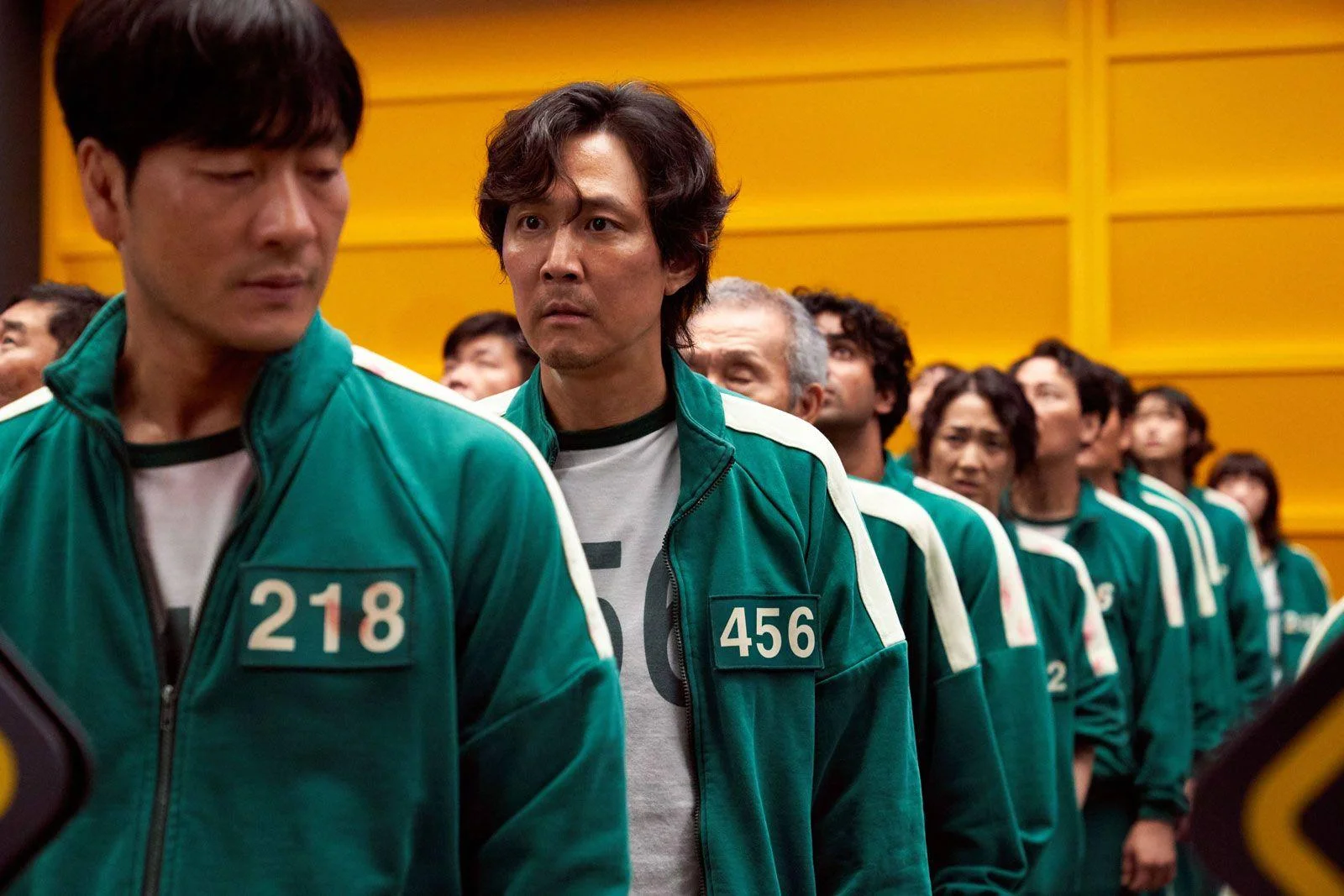
When it arrived in 2021 it became Netflix’s most watched show globally and sparked more cultural conversation than almost anything else that decade. It is a survival competition drama set in South Korea, following desperately indebted people competing in children’s games where the losing is fatal. What made it extraordinary was not the concept — which sounds straightforwardly grim — but how sharply it used that concept to talk about economic desperation, class, and what systems do to people at the bottom of them.
Season Two arrived in late 2024 and divided people pretty cleanly. Some viewers felt it went deeper into ideas the first season had only sketched. Others felt the original was unrepeatable and the second season proved it. I lean toward the first camp, but I understand the second.
What I found interesting was how differently the show landed depending on where people were watching from. Korean viewers read class signals and cultural references in Season Two that completely bypassed international audiences. That gap produced a fascinating secondary wave of explainer videos and essays that were, in some ways, as interesting as the show itself.
Start with Season One regardless. Both are on Netflix everywhere.
Shōgun
This one is about two years old now and still coming up constantly in recommendations, which tells you something.
FX adapted James Clavell’s novel about an English sailor who arrives in feudal Japan in 1600 and finds himself entangled in a political conflict far more complex than anything he came prepared for. The show made the decision to film the majority of its scenes in Japanese with English subtitles, which was apparently a contested choice during production. It turned out to be the choice that made the show exceptional.
Following the protagonist’s gradual, fumbling comprehension of the world he has landed in mirrors exactly what the viewer is doing. You are learning alongside him. By the time he understands something, you understand it too, and there is something quietly satisfying about that structure.
It is dense. The political alliances and historical context require actual attention — this is not background television. But for viewers who commit to watching it properly, it is some of the richest storytelling currently available anywhere.
The fact that it performed well specifically with Japanese audiences is notable. Western productions set in Japan have a fairly poor track record of meeting the standards that Japanese viewers apply. Shōgun seems to have genuinely earned that reception through the seriousness of its collaboration with Japanese creators and actors.
Available on Hulu in the US and Disney Plus in most international markets.
The Bear
I have had more arguments about The Bear than about almost any other show in recent memory, which probably tells you more about its quality than any description I could give.
It is set in a high-pressure Chicago restaurant kitchen and follows a James Beard-level chef who inherits the family sandwich shop after a family tragedy and tries to transform it into something worthy of his training. The cooking is accurate. The professional kitchen dynamics are accurate. The way people in high-stress environments talk to each other, wound each other, and simultaneously depend on each other is accurate in ways that make it genuinely uncomfortable to watch if you have ever worked anywhere with that kind of pressure.
Some people find it unpleasant to spend time in. The anxiety is constant and loud and the characters make decisions that are maddening. I think that is the show working correctly, but it is a reasonable reason to tap out.
What it has done that is genuinely unusual is generate serious public conversation about workplace mental health — not through a special episode with a message, but by simply depicting what high-pressure work environments actually feel like from the inside with enough fidelity that people who have lived that experience recognize it immediately.
Season One is the tightest and the best entry point. Seasons Two and Three expand in ways that not everyone has found satisfying, but the performances Jeremy Allen White and Ayo Edebiri particularly are worth following through the more experimental material.
Hulu in the US, Disney Plus internationally.
K-Dramas and Why They Have Everyone Now
I resisted Korean dramas for longer than I should have. My reasoning, which I now recognize as embarrassing, was that sixteen-episode seasons felt like too much commitment and I was not sure the emotional payoff would be there.
The emotional payoff is absolutely there. That is the understatement of the last several years of my viewing life.
Shows like My Mister, which has been quietly recommended for years and keeps finding new audiences who then immediately tell everyone they know about it, and newer productions like When the Stars Gossip and Doctor Slump have built global followings that extend well beyond the communities that were watching Korean content a few years ago.
The genre conventions take some adjustment if you are coming from American television. The pacing is genuinely slower, particularly in the first four episodes. Characters are developed with a patience that American network television essentially abandoned fifteen years ago. And because most K-dramas tell a complete story in a single season without open endings designed to force a renewal, the narrative satisfaction when they finish is something Western serialized television rarely delivers.
What has pulled people in from outside the traditional Korean drama audience is how well short clips travel on TikTok and Instagram. A scene that communicates something emotionally precise needs no cultural context to land. It pulls people into shows they would never have encountered through traditional recommendation channels.
Netflix has the largest internationally available library of Korean content. Viki is worth knowing separately — it covers shows Netflix does not carry in every region and has a community of volunteer subtitlers and viewers who discuss episodes with genuine depth.
Slow Horses
This one I recommend to people who tell me they are tired of spy thrillers, which sounds counterintuitive. Bear with me.
Slow Horses is on Apple TV Plus and is based on Mick Herron’s novel series about a department of British intelligence agents who have been exiled there after career-ending mistakes. They are housed in a decrepit office, given no meaningful work, and managed by Jackson Lamb played by Gary Oldman who is one of the most memorable characters I have encountered in television in years.
Lamb is brilliant, strategically slovenly, genuinely unpleasant to be around, and funny in a way that sneaks up on you rather than announcing itself. The show shares those qualities. There is no hand-holding, no signposting of its own intelligence. The audience is simply trusted to keep up.
Finding its audience took time, mostly through the kind of recommendation chain where someone whose opinion you respect says you specifically would like it. That pattern tends to produce viewers who are unusually loyal, and Slow Horses has that — people who have watched it tend to recommend it with a fervency that is slightly out of proportion with its quiet profile.
Four seasons are available. If you already have Apple TV Plus and have not watched it, it is the best thing currently on the platform. If you do not have Apple TV Plus, it is available as a standalone subscription and this show combined with Severance makes the cost fairly justifiable.
How to Actually Choose What to Watch When Everything Is Overwhelming
The honest problem with the current television landscape is that the volume of genuinely good content makes choosing feel harder than it should.
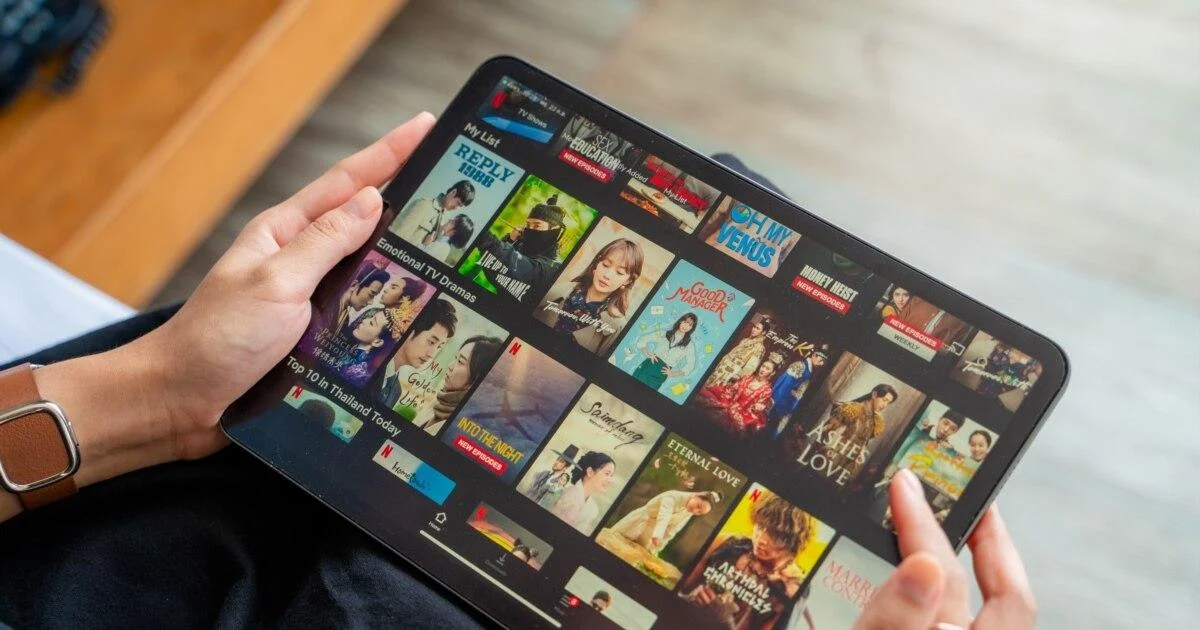
I have wasted more time than I want to admit scrolling through streaming platform menus, reading summaries, watching thirty seconds of something, deciding it was not the right mood, and eventually watching something I had already seen because the decision became exhausting. That experience is so common it has its own name now.
What has actually helped me narrow things down more efficiently:
Think about your current capacity before thinking about genre. Whether you can commit to ten episodes or only have energy for something self-contained in four affects which category of show to even consider. Matching the format to your actual life situation eliminates most of the decision paralysis before it starts.
Get your recommendations from people rather than platforms. The trending section on any streaming service is optimized for the platform’s engagement metrics, not your enjoyment. A friend whose taste has proven reliable over time is a more trustworthy signal than any algorithm. When someone who genuinely knows your preferences says you specifically would like something, that is worth more than any star rating.
Give the second episode a chance when the first one does not fully land. Pilot episodes carry an enormous structural burden — they need to establish characters, world, tone, and story simultaneously, which means they are almost always the least representative episode of a show. The Bear’s first episode throws you into controlled chaos. Slow Horses’ first episode is deliberately low-key. Neither tells you fully what the show becomes.
Keep a simple running list of what you want to watch rather than trying to remember it. Notes app on your phone, a note in your Notion, anything that keeps recommendations from evaporating between when you hear them and when you actually have time to watch.
The Mistake That Quietly Ruins the Experience
Watching something great at two in the morning when you need to be awake in five hours is something I have done more times than I should admit, and it has never actually been worth it.
Being tired does not make emotional scenes land deeper. It makes everything feel slightly worse and slightly harder to process, and then you wake up feeling like you have done something to yourself rather than something for yourself.
The shows on this list are good enough to deserve your full attention at a reasonable hour. Treating them the way you would treat a book you are genuinely enjoying giving them proper time, stopping at a point that feels right rather than the point where you physically cannot continue tends to produce a better experience than mainlining eight episodes in a deteriorating state.
The anticipation of returning to something you are genuinely enjoying is its own pleasure. Burning through everything in 48 hours often leaves you with less of the experience than watching it across a week would have. Some of these shows deserve to be savored a little. The Saturday list will still be there.