
I almost did not go to Cappadocia.
The trip had been planned twice before and cancelled both times — once because of work, once because a friend pulled out and somehow the whole thing fell apart. By the third attempt I was half-convinced I was not meant to see it. I booked the flights in a slightly defiant mood, telling myself that if something came up this time I was going anyway.

Nothing came up. I went. And I stood in a valley full of ancient rock formations at six in the morning watching hot air balloons drift silently overhead in the early light, and felt that specific kind of stupidity that comes from almost missing something genuinely extraordinary.
That feeling is what this article is about. Not bucket lists — I find bucket lists slightly exhausting as a concept — but specific places that do something to you that is difficult to explain before you have been there. Places where the gap between looking at photographs and actually standing there is wide enough to make photography feel almost beside the point.
Here are the ones I think are worth the disruption of getting there.
Cappadocia, Turkey
Since I already mentioned it, I should actually describe it properly.
Cappadocia is a region in central Turkey where volcanic eruptions millions of years ago deposited thick layers of ash that compressed into a soft rock called tufa. Wind and water eroded that rock over thousands of years into formations called fairy chimneys — tall, tapered columns with harder caps that resisted erosion, giving them a mushroom-like shape. Early inhabitants carved homes, churches, and entire underground cities into this rock. The landscape is unlike anything I had seen in photographs and even more unlike anything I expected standing inside it.
The balloon flights happen at dawn and last roughly an hour. Book in advance — several weeks in advance if you are visiting in spring or autumn, which are the peak seasons. Urgup Balloons and Royal Balloon are both well-established operators with consistent reputations. The cost is high compared to most activities you will find in Turkey, but it is one of those experiences where I genuinely did not resent the price.
The underground cities are the thing most visitors underestimate. Derinkuyu, the deepest one open to the public, descends roughly 85 meters underground and could house around 20,000 people when it was in use. Walking through it produces a particular kind of quiet awe that the surface landscape, spectacular as it is, does not quite replicate.
Stay in a cave hotel if you can. Not as a gimmick — the rooms genuinely stay cool in summer and warm in spring evenings, and waking up inside a rock formation that humans carved a thousand years ago is its own quiet experience.
The Faroe Islands
Most people I mention the Faroe Islands to respond with a version of “where is that exactly?” It is an archipelago in the North Atlantic, roughly halfway between Norway and Iceland, belonging to Denmark but self-governing. There are 18 islands. About 54,000 people live there.

I went expecting dramatic landscapes and got something more complicated than that. The Faroes are dramatic in the way that genuinely wild places are dramatic — not photogenic in a composed way, but overwhelming in a way that keeps shifting depending on the light and the weather, which changes constantly and sometimes within the same hour.
The cliffs at Traelanipa drop almost 100 meters straight into the Atlantic. The village of Saksun sits at the end of a narrow fjord that becomes a tidal lagoon at low tide. The sea stacks at Drangarnir are accessible only on foot through terrain that requires some fitness and proper footwear — trail shoes at minimum, hiking boots preferred.
A practical note that took me slightly by surprise: the Faroe Islands are expensive. Comparable to Iceland or Norway. Accommodation books out well in advance during summer. The local tourism board, Visit Faroe Islands, has a genuinely useful website that also operates a “closed for maintenance, open for voluntourism” scheme where visitors can volunteer on local projects in exchange for access to normally restricted areas. It is worth looking into if you plan far enough ahead.
Weather will affect what you can access. Go with flexible plans rather than a rigid itinerary, and treat fog and low cloud as part of the experience rather than a problem to be solved.
Kyoto, Japan
I know. Kyoto appears on every travel list. There is a reason for that, and the reason is that some places genuinely earn their reputation.
I visited in early April, which is cherry blossom season, which I understood intellectually would be beautiful and crowded. I was not prepared for how beautiful or how crowded. The paths around Maruyama Park at night, lit lanterns among the blossoms, with the smell of food from the stalls and the sound of people moving through it quietly — that is an experience that exists in its own category.
But Kyoto off the main tourist path is a different experience from Kyoto at its most famous landmarks, and the off-path version is the one I would go back for.
The Fushimi Inari shrine, which everyone photographs, is most extraordinary at 5am before the crowds arrive or in the late evening when most visitors have left. The upper sections of the mountain, away from the main torii gates, are genuinely quiet and genuinely beautiful and most visitors do not reach them because they turn back at the middle levels.
The Philosopher’s Path, the canal-side walk lined with cherry trees, is famous for good reason. Less famous is the network of small temples and gardens accessible from it, many of which charge a modest entry fee and contain five or six visitors rather than five or six hundred.
Google Maps works well for navigation. The IC card (Suica or ICOCA) loaded with money covers almost all local transit and is significantly easier than buying individual tickets. Learn a handful of Japanese phrases — even approximate attempts are appreciated in a way that makes practical interactions warmer.
The Amalfi Coast, Italy
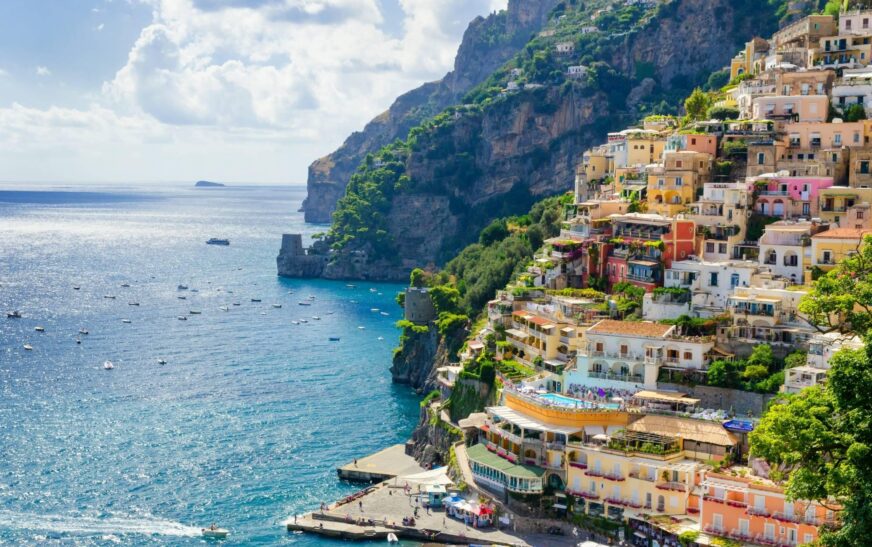
I made a mistake on the Amalfi Coast that cost me approximately two hours of a limited afternoon: I drove it.
Renting a small car and driving the Amalfi Coast sounds romantic. In practice, the road is one narrow lane in most places, the tourist buses take up most of it, reversing around blind corners above sheer drops is an activity I did not enjoy, and finding anywhere to park in any of the towns requires a combination of patience and luck that I do not naturally possess.

Take the ferry between towns instead. The coastal ferry service connects Positano, Amalfi, Ravello, and the other towns along the coast, and the view from the water is better than the view from the road in any case. The schedule is on the CSTP and Alilauro websites and is generally reliable in good weather.
Positano is the most photographed and the most expensive. It is genuinely stunning and I do not regret spending time there, but I liked Praiano and Furore — smaller towns accessible from the same coast — with a depth of feeling I did not quite reach in Positano, possibly because they were quieter.
Go in May or September rather than July or August. The shoulder seasons have most of what makes summer worth visiting with noticeably fewer people and considerably lower accommodation prices. The sea is warm enough for swimming in both months.
The Atacama Desert, Chile
The Atacama is the driest non-polar desert on Earth. Some parts of it have recorded no rainfall in recorded history. It is also where some of the most otherworldly landscapes on the planet sit quietly waiting for people who are willing to get to San Pedro de Atacama, which requires either a flight through Santiago or a lengthy overland journey.
The salt flats at sunset. The Valley of the Moon, where the surface looks close enough to the actual moon that NASA has used it for rover testing. The geysers at El Tatio, which erupt best at dawn when the temperature difference between the gas and the cold morning air creates the most visible steam — you need to be there by 6am, which means leaving San Pedro by 5am, which means either hiring a tour or renting a 4WD and knowing what you are doing.
The stargazing deserves specific mention. The Atacama has the clearest night skies of anywhere I have been. The lack of humidity and the altitude combine with the minimal light pollution to produce a sky that looks genuinely different from any other night sky I have experienced. There are professional observatory tours run from San Pedro — Atacama Astronomers and Space Obs both have good reputations — but even lying on the ground outside your accommodation for twenty minutes and looking up produces something remarkable.
The altitude affects people differently. San Pedro sits at 2,400 meters, and many of the excursions go higher. Drink water, move slowly for the first day, and give yourself time to acclimatize before doing anything strenuous.
Varanasi, India
Varanasi is not a place I can tell you to go to in the same way I can recommend the Amalfi Coast or the Faroe Islands, because it is not a comfortable experience and I think misrepresenting it as one would be doing you a disservice.
It is one of the oldest continuously inhabited cities on Earth. It sits on the Ganges. The ghats — wide stone steps descending to the river — are where Hindu cremation ceremonies take place openly, where pilgrims bathe at dawn in water they consider sacred, where sadhus meditate beside people washing laundry beside people selling chai beside everything else that Varanasi contains simultaneously.
It is overwhelming in a way that does not resolve into simple beauty. It is also unlike anywhere else I have been in the world, and the morning boat ride on the river at dawn — watching the ghats come to life as the sun rises, the sound of bells and chanting and water — is something I think about more than almost any other travel memory I have.
Go with as few fixed expectations as possible. Read about the place before you arrive so the context makes sense, but try not to arrive with a checklist of experiences you are determined to have. Varanasi tends to give you something different from what you came looking for, and the thing it gives you is usually more interesting.
How to Actually Plan for Places Like These
The practical gap between wanting to visit somewhere and actually going is where most trips die, and it is worth talking about honestly.

The places on this list are not difficult to visit in terms of logistics — they all have established tourism infrastructure, accommodation options across a range of budgets, and information available in English. The difficulty is usually the inertia of not booking, the trip that gets mentioned in conversation and never moves past that.
What has worked for me is booking the flights before anything else. Not the accommodation, not the detailed itinerary — just the flights. Once flights exist, the trip becomes real in a way it does not when it is still just an idea. Everything else can be arranged around fixed travel dates, and the existence of those dates creates momentum that planning in the abstract never produces.
For researching specific destinations in depth, a combination of Lonely Planet for structural information, Reddit’s travel communities for current practical advice, and Google Maps for getting oriented before arrival covers most of what I need. The subreddit for any specific country or city tends to have people who have recently visited answering questions from people about to go, which is more current and more specific than most guidebook information.
Travel insurance is not optional for any of the places on this list. World Nomads and SafetyWing both offer policies that cover the kind of activities — hiking, altitude, remote locations — that make these destinations interesting.
The Mistake That Wastes the Most Time
Trying to see too much in too little time is the most consistent travel mistake I have made and watched other people make.
Three countries in ten days sounds efficient. In practice it means airports, transitions, orientation, packing and repacking, and almost no time in any one place long enough to move past the surface layer that guidebooks describe.
The places on this list specifically reward time. Cappadocia over four or five days is a fundamentally different experience from Cappadocia in two. Kyoto in a week gives you time to wander without purpose and stumble into the things that do not appear on any itinerary. The Atacama requires at least three days to reach the high-altitude sites, recover, and still have time left to simply sit in the desert and exist in it.
Fewer places, more time. Every time I have applied that principle I have come home with more than I expected. Every time I have ignored it I have come home with photographs and a feeling that I skimmed something I should have read properly.
Some places are worth going back to. Most of the ones on this list are. But getting there the first time matters more than getting somewhere else quickly.
Interesting Facts Most People Don’t Know (And Honestly Should)
My nephew asked me last summer why the sky is blue. I gave him the whole confident uncle answer about light scattering and wavelengths. He nodded like he understood and then asked, “But why is it blue specifically and not green?”

And I just stood there. I didn’t actually know. I knew the surface-level version of the answer. The real answer, the deeper one, took me twenty minutes of reading to properly understand.
That one moment kind of opened something up for me. How many things do I think I understand that I actually only half understand? Turns out, a lot. And along the way I kept bumping into facts that genuinely stopped me cold. Stuff that wasn’t on any school curriculum I remember, stuff that most people I know have no idea about.
This article is a collection of those things. Not trivia. Not party tricks. Just honest, real, mind-shifting stuff that changes how you see the world once you know it.
The Pyramids Were Already Ancient History to Cleopatra
Most people loosely think of ancient Egypt as one big chunk of time. Cleopatra, pyramids, mummies, pharaohs, all sort of the same era in our heads.
But here’s what actually happened. The Great Pyramid of Giza was finished around 2560 BCE. Cleopatra was born around 69 BCE. That’s a gap of roughly 2,500 years between her and the pyramids.
The Moon landing was 1969. That’s only about 2,000 years after Cleopatra died.
So Cleopatra is actually closer to us, to Wi-Fi and smartphones and going to space, than she is to the civilization that built those giant stone structures. To her, the pyramids were already ancient ruins. She lived in a world where the pyramids were old mysteries, not new constructions.
I had to sit with that for a minute. It completely rearranged how I visualize history.
Oxford University Was Already Old When the Aztecs Started Building Their Empire
This one I genuinely did not believe when I first read it. I looked it up three separate times.
Teaching at Oxford began somewhere around 1096 to 1167 CE. The Aztec Empire, the one we usually picture when someone says “ancient civilization,” was founded in 1428 CE.
By the time the Aztecs laid the first stone of Tenochtitlan, Oxford had already been running as a university for over 250 years. Students had already graduated, grown old, and died at Oxford before the Aztec Empire existed as a political entity.
We call both things “historical” and “ancient” but that’s just lazy shorthand for “old stuff.” The actual gap between them is enormous.
Woolly Mammoths Were Still Alive During the Egyptian Middle Kingdom
People think mammoths are from the same deep past as dinosaurs. That they disappeared millions of years ago into some prehistoric fog.
A small population of woolly mammoths survived on Wrangel Island, off the coast of Siberia, until around 1650 BCE.
Egypt’s Middle Kingdom ran roughly from 2055 to 1650 BCE. Scribes were writing on papyrus, pharaohs were building monuments, trade routes were active across the ancient world, and somewhere up in the Arctic, the last woolly mammoths were still wandering around.
They didn’t go extinct because of some catastrophic ancient event. The last of them died out around the same time as a fully functioning literate civilization. We just weren’t close enough geographically to save them, or to even know they were there.
Sharks Have Been Around Longer Than Trees
This took me a genuinely embarrassing amount of time to accept as true.
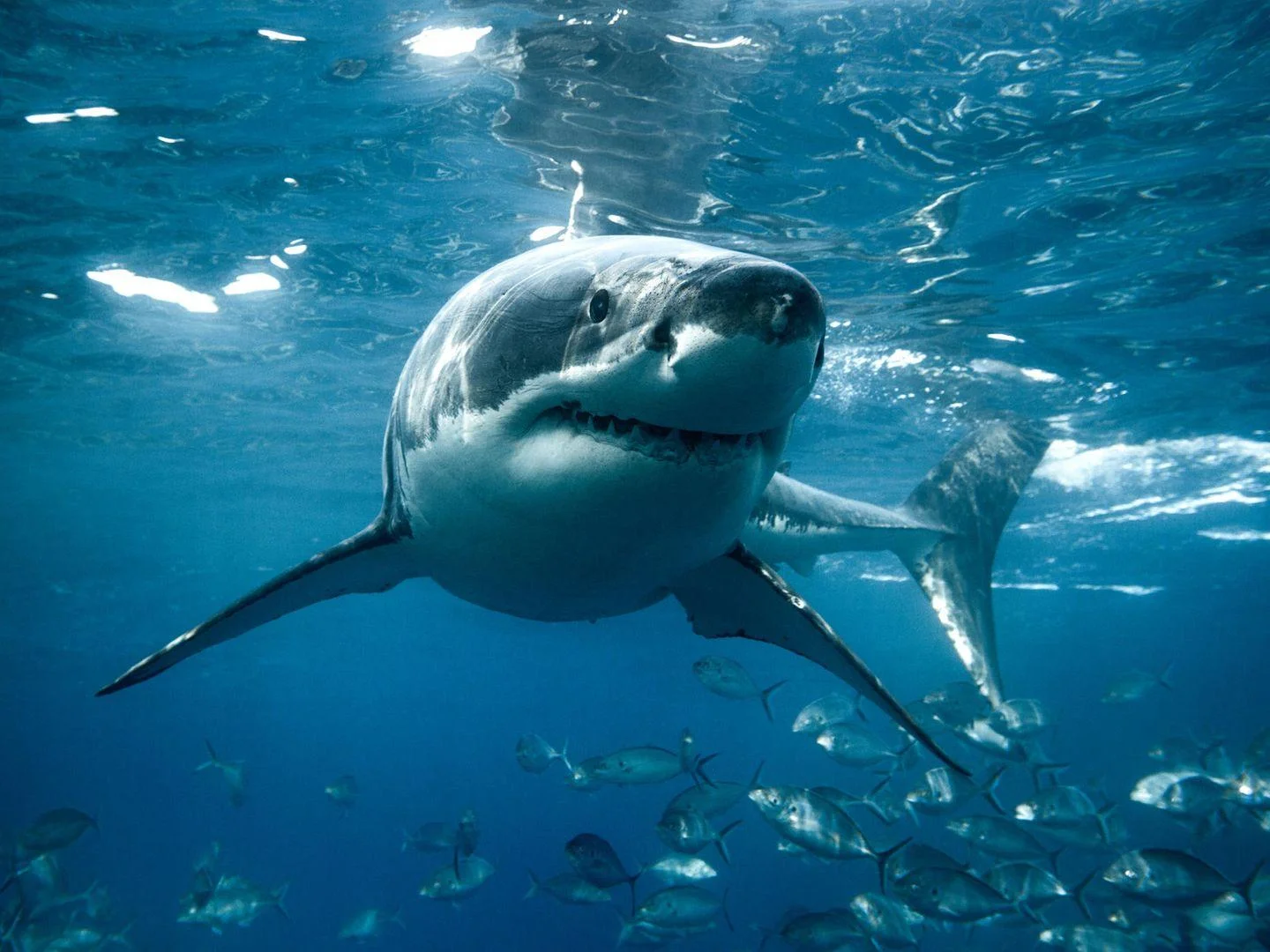
Sharks first appeared in the fossil record about 450 million years ago. Trees, actual vascular trees with trunks and root systems, showed up around 350 million years ago.
That means sharks were cruising the ocean for 100 million years before the first tree ever grew on land. They’ve survived every major mass extinction since, including the one that killed off the dinosaurs 66 million years ago, which wiped out roughly 75 percent of all species on Earth.
Sharks are not just old. They’re incomprehensibly old. The fact that we treat them primarily as a threat, rather than one of the most extraordinary survival stories in the history of life on this planet, says something about our priorities.
Saturn’s Rings Are Younger Than You Think
Here’s the flip side of the shark fact.
Most people assume Saturn’s rings have been there since the solar system formed, that they’re 4.5 billion years old, a permanent feature. They look ancient in every photo.
But data from the Cassini spacecraft, which orbited Saturn from 2004 until it was intentionally crashed in 2017, suggests the rings are actually only somewhere between 10 and 100 million years old.
Dinosaurs were already walking around on Earth before Saturn’s rings existed. The T-Rex was alive before those rings formed.
That image, rings forming while Cretaceous dinosaurs tramped through prehistoric forests, is just not something I expected to be true.
The Eiffel Tower Is Taller in Summer
This sounds like a riddle but it’s physics.
Iron expands when it heats up. The Eiffel Tower is made of iron. When Paris gets hot in summer, the tower can grow by up to 15 centimeters, close to 6 inches, taller than it is in winter.
This is actually designed for. Bridges, railways, roads, they all have small expansion gaps built in for exactly this reason. If they didn’t, the metal would buckle when temperatures climbed.
Most people walk past giant metal structures every day without thinking about the fact that they’re silently breathing with the seasons. A bridge you cross in January is slightly shorter than the same bridge in August. Nothing dramatic, but it’s real and measurable.
There Are More Trees on Earth Than Stars in the Milky Way
The Milky Way contains somewhere between 100 and 400 billion stars. That number is already impossible to properly picture.
A study published in Nature in 2015 estimated there are about 3 trillion trees on Earth. Three thousand billion. Somewhere between 7 and 30 times more trees than stars in our galaxy.
The part that stuck with me wasn’t the big number though. It was the second finding from that study. We’ve cut down roughly 46 percent of Earth’s trees since humans began farming and building civilizations. There used to be almost twice as many.
The world we live in is already significantly deforested compared to what it looked like before us. And the current number still dwarfs the stars in our galaxy. Both of those facts feel important to hold at the same time.
The Smell Before Rain Has a Name
That specific earthy smell that shows up right before or just after rainfall, especially after a dry stretch, is called petrichor. Two Australian scientists named it in 1964: Isabel Joy Bear and Richard Thomas.
It comes from a combination of plant oils that build up in dry soil, plus a compound called geosmin produced by soil bacteria. When rain hits the ground, it releases these compounds as tiny airborne droplets. That’s what you’re smelling.
Here’s the part I find genuinely fascinating. Humans can detect geosmin at concentrations of about 5 parts per trillion. That’s an extraordinary level of sensitivity for a smell. Some researchers think we evolved to be that sensitive because rain and fertile soil meant survival for our ancestors. Following the smell of rain led to water and food.
You’re not just enjoying a pleasant smell on a rainy afternoon. You’re responding to a signal your ancestors relied on to stay alive.
You Actually Cannot Hum With Your Nose Plugged
Try it right now. Pinch your nose shut and try to hum.
Nothing comes out. Or at least nothing that sounds like humming.
Humming works by vibrating air through your nasal passages. That resonance is what creates the sound. Block the passages and the air has nowhere to go, so the sound just doesn’t happen.
This is also the actual reason your voice changes when you have a cold. It’s not just congestion making you sound stuffy. Your nasal passages are partly blocked, which changes the resonance, which physically alters how your voice sounds. You literally sound different because your sound chamber is different.
I went around making people try the nose-pinching thing for about a week after I learned this. It works every single time and people are always surprised.
Hot Water Can Freeze Faster Than Cold Water
This one still doesn’t feel like it should be true.
It’s called the Mpemba Effect, named after a Tanzanian teenager named Erasto Mpemba, who noticed in 1963 that his hot ice cream mix was freezing faster than the cold mix his classmates used. He brought it up to a visiting physicist named Denis Osborne, who was skeptical but actually ran the experiment and found that Mpemba was right.
Why does it happen? That’s where it gets interesting. Scientists still don’t fully agree. Leading theories involve dissolved gases escaping from hot water faster, hot water evaporating slightly so there’s less of it to freeze, or differences in how heat moves through the water. It doesn’t happen every single time, conditions matter, but it’s a real and reproducible phenomenon.
Something as simple and everyday as water freezing still has unresolved scientific explanations. That fact alone makes me feel a lot better about not having all the answers to things.
A Day on Venus Lasts Longer Than a Year on Venus
Venus rotates on its axis incredibly slowly. One full rotation takes about 243 Earth days. That’s what creates a day on Venus.
But Venus orbits the Sun in about 225 Earth days.
So it completes an entire trip around the Sun before it finishes a single rotation. A year on Venus is shorter than a day on Venus.
And it gets stranger. Venus spins in the opposite direction from most planets in our solar system. On Venus the Sun rises in the west and sets in the east.
If you were somehow standing on the surface of Venus, which would kill you instantly for several other reasons, you would watch the Sun crawl across the sky from the wrong direction over the course of what felt like an eternity, and the year would have already ended before it crossed overhead.
Your Brain Runs on Less Power Than a Light Bulb
The human brain uses roughly 20 watts of energy. A basic incandescent light bulb uses 60 watts. Your phone charger probably pulls more than your brain does.
On that 20-watt budget, your brain is simultaneously processing what your eyes see, what your ears hear, managing your heartbeat and breathing without you thinking about it, running your emotions, retrieving memories, understanding language as you read this sentence, and doing roughly a hundred other things at once.
Engineers trying to build computers that replicate even a fraction of what the brain does run into a simple brutal problem: they can match the processing in some narrow ways, but they can’t come close to the efficiency. A supercomputer that can do what your brain does would need vastly more power and a building to put it in.
The most complex thing we know of in the universe fits inside your skull and runs on less electricity than a nightlight.
Things That Sound Like Facts But Aren’t
A quick side note because this genuinely matters.

The “we only use 10 percent of our brains” thing is false. Brain scans show we use virtually the entire brain, just not every part simultaneously. There’s no dormant 90 percent waiting to be unlocked.
Napoleon was not unusually short. He was around 5 feet 6 or 7 inches, which was average or slightly above average for a French man of his era. The short story partially came from British propaganda cartoons and partially from a unit measurement mixup between French and English inches.
Goldfish don’t have a three-second memory. Studies have shown they can remember things for months and can be trained.
None of this is meant to be pedantic. It’s just that wrong “interesting facts” spread faster than correct ones, and checking sources before repeating something is one of those habits that’s genuinely worth building.
Why Any of This Actually Matters
I’m not going to pretend that knowing about petrichor or Venus’s rotation is going to change your career or fix any real problem in your life.
But here’s what I’ve noticed. Every time I learn something that surprises me, something that turns out to be different from what I assumed, I get a little bit better at holding my other assumptions more loosely. I get a little bit less certain. And being a little less certain turns out to be a useful way to move through the world.
Most of the mistakes I’ve watched people make, myself included, came from being too confident about things they hadn’t actually examined. The habit of being genuinely surprised, of going “wait, really? let me actually look that up,” is rarer than it sounds. And it’s connected pretty directly to making better decisions.
So these facts aren’t really the point. The curiosity behind them is. The willingness to discover that something you thought you understood turns out to be more complicated, more strange, or more interesting than you knew.
My nephew’s question about why the sky is blue specifically and not green led me down a rabbit hole that lasted two hours and ended with me understanding something real about how light and atmosphere interact. He moved on and forgot about it in thirty seconds.
But I didn’t. And that’s kind of the whole thing.