
The first time I watched a serious behind-the-scenes documentary about a major film production, I could not believe what I saw. I had always assumed a movie set looked like the movie itself: dramatic, purposeful, full of people doing exciting things.

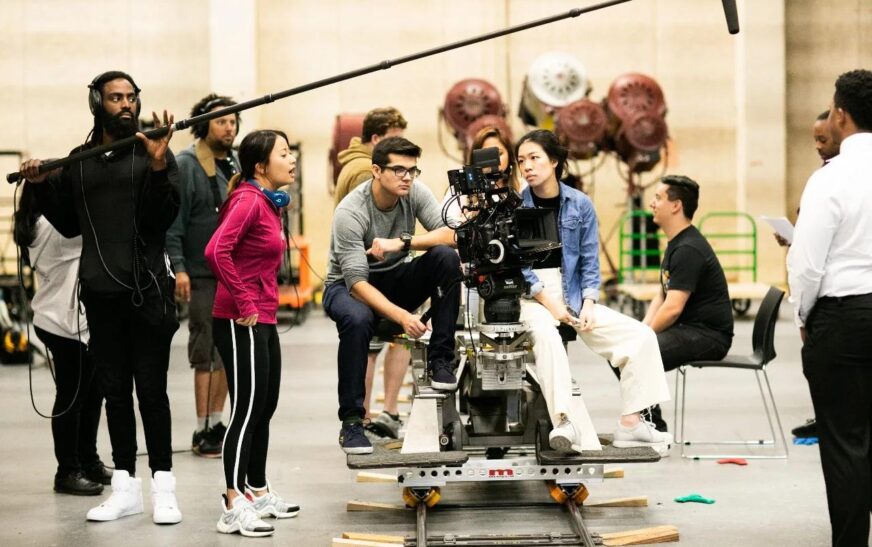
What I found instead looked more like a construction site crossed with a logistics company. Cables everywhere. People in headsets walking fast with clipboards. Long stretches of nothing, then thirty seconds of filming, then more waiting. The glamour I had imagined was almost completely absent.
That gap between what audiences see on screen and what happens behind the camera is one of the most interesting stories in entertainment. Most people who love film have almost no idea how the process actually works.
This article walks through how Hollywood’s biggest productions come together, what those job titles actually mean, what tricks the industry uses, and why some things that look like mistakes are actually deliberate choices.
How a Film Gets Made Before Anyone Sets Foot on Set
Most people think a movie starts when cameras roll. In reality, the camera is almost the last thing to arrive.
Pre-Production Takes Longer Than You Think
Before principal photography begins, a film goes through a pre-production phase. On major studio productions this can last anywhere from a few months to over a year. During this period, the director and screenwriter finalize the shooting script. Artists draw storyboards for complex sequences. Location scouts travel the world. The costume team designs, sources, and fits everything. Entire sets get built from scratch inside enormous soundstages.
The first assistant director creates what the industry calls a shooting schedule. This document maps out every scene, how long each will take, which cast members are needed on which days, and what order everything happens in.
Movies Are Not Filmed in Order
Here is something that surprises most people: movies are almost never filmed in the order you watch them. A scene from the final act might be filmed on day three because that location is only available then. The opening scene might be filmed in the last week of production.
This is purely logistical efficiency. It creates real challenges for actors. They need to access emotional states from different points in a character’s arc on any given day, sometimes jumping between scenes set years apart in the story’s timeline.
The People Nobody in the Audience Has Ever Heard Of
Every major production has crew roles most viewers have never encountered. Some of them are quietly essential to everything working.
The Script Supervisor Keeps Everything Consistent
The script supervisor holds one of the most underappreciated jobs in filmmaking. Their entire function is continuity. They make sure that if an actor’s jacket is buttoned in the first shot of a scene, it is also buttoned in every other shot. They track costume states, prop positions, how far a cigarette has burned down, and exactly which hand an actor used to pick up a glass.
Their notes allow an editor to cut between shots filmed days apart and have them match seamlessly. Without a sharp script supervisor, a film falls apart in the edit.
The Foley Artist Builds the Sound World From Scratch
The foley artist is a role almost nobody outside the industry knows about. When you watch a scene and hear footsteps on gravel, cloth rustling as someone walks, or the sound of a coffee cup hitting a wooden table, those sounds almost certainly did not come from the set. A foley artist recorded them later in a dedicated studio, working against the edited footage frame by frame.

The art of foley involves reproducing everyday sounds with whatever actually works. Snapping a piece of fresh celery produces a convincing broken bone. The Raging Bull team punched a side of beef to capture the texture of a real boxing hit. The foley stage at Lucasfilm’s Skywalker Ranch reportedly looks like a cross between a junk store and a scientist’s workshop, full of materials chosen purely for the sounds they make.
Without foley artists, films sound flat and distant. The sound crew on set captures dialogue and not much else. Everything else builds layer by layer in post-production.
The Prop Master Tracks Every Single Object
The prop master owns responsibility for every object an actor touches or interacts with during filming. A phone, a book, a pen, a weapon, a coffee cup: the prop master sourced it, maintains it, and keeps it looking identical across every shot it appears in. On large productions, this is a serious organizational undertaking that runs across weeks of shooting.
What the Cameras Actually See Versus What Gets Built
The scale of production design on a Hollywood blockbuster does not translate through a screen.
Sets Are Smaller Than They Look
When you watch a film set in an ancient city or on a distant planet, you are usually seeing a combination of a partial physical set on a soundstage, a digitally painted surrounding environment, and careful lighting that makes thirty square meters look like thirty square kilometers.
Crowd scenes work the same way. The thousands of spectators in a stadium sequence typically involve a small group of extras who rotate through positions between takes. Digital artists then copy and multiply those extras across the frame. What looks like five thousand people is often closer to two hundred, shot and replicated carefully.
How Directors Solve Problems You Never Notice
Mirrors create a specific headache for filmmakers. A mirror reflects everything, including cameras, crew, and lighting rigs. James Cameron solved this for a scene in Terminator 2 by building an exact replica of the set and placing a one-way glass window where the mirror would be. The camera shot through the glass without appearing in the reflection. Nobody watching the film has any idea.

Weather on set is almost always artificial. Rain sequences use hoses rigged above actors at specific heights. Snow comes from a machine producing soap-based flakes that hold their shape under hot camera lighting, unlike real snow that melts immediately. One company called Snow Business has supplied artificial snow to Hollywood productions since the 1980s, reportedly maintaining around two hundred different snow types. Fog comes from a standard fog machine adjusted for density.
The Tricks That Make Actors Look Different on Screen
Digital Retouching Happens More Than People Know
Post-production teams routinely adjust the appearance of actors after filming ends. They remove blemishes and wrinkles across budget levels. They adjust hairlines. They modify physical features. This is the same principle as photo retouching, but editors apply it frame by frame to moving footage.
A less discussed technique involves digital removal of physical features entirely. For films depicting characters with amputations, such as Forrest Gump or Soul Surfer, the actor wears a solid-colored sleeve over the limb the story requires to be missing. That sleeve acts as a miniature greenscreen. Post-production teams then erase it digitally. The physical difference audiences see on screen exists only in the edit.
Why Costumes Never Get Washed
Costumes on active productions almost never go through a washing machine. Fabric fades and changes color when washed. Laundering a costume between shooting days introduces visible inconsistencies the camera catches immediately. Instead, costume departments spray clothing with specialist cleaning products between takes. They preserve the overall appearance, including any deliberate dirt or wear, exactly as it was.
Why Some Continuity Errors Are Actually Deliberate Choices
Every film has continuity errors. Some generate entire websites dedicated to cataloguing them. What most people miss is that many of these errors are not mistakes at all.
When Directors Break the Rules on Purpose
The Dark Knight Rises has a sequence where Batman enters a tunnel in daylight and emerges in total darkness. Objectively this makes no sense. It is clearly deliberate. Christopher Nolan wanted the nighttime atmosphere for the shots that followed. He knew the audience would be too engaged in the story to question it in real time. He was right.
Director Rian Johnson revealed a different kind of deliberate choice. Apple permits its iPhones in films but prohibits their use as villain props. The company licenses the product for productions but blocks association with antagonists. The practical result is that in mystery films, you can often identify the villain simply by noting whose phone is not an iPhone.
These are not accidents. They result from dozens of decisions involving creative intent, brand agreements, schedule constraints, and budget realities all running at the same time.
What Happens After the Last Day of Shooting
Post-Production Is Where the Film Gets Made a Second Time
The industry calls the final shooting day a wrap. For actors, it feels like the end. For a large portion of the crew, it marks the beginning of the serious work.
Post-production on a major Hollywood film takes six months to a year. Visual effects shots, sometimes numbering in the thousands, get built entirely after cameras stop rolling. Color grading, where a specialist adjusts every shot for consistent mood and tone, takes months on its own. Composers write the musical score during this period. Sound mixers assemble dialogue, foley, music, and effects into the layered audio audiences hear in a theatre.
The First Cut of Every Film Is Too Long
The rough cut editors start with almost always runs significantly longer than the finished film. Scenes get cut. Sequences get restructured. Entire subplots sometimes disappear between the rough cut and the version that opens in cinemas.
An editor on a major production spends months making decisions that shape the final experience as much as anything that happened on set. Some directors consider editing the true third draft of the script.
What People Who Work in Film Say That Outsiders Rarely Understand
The most consistent thing experienced film professionals say is that filmmaking is fundamentally a problem-solving job. Planning matters. Almost nothing goes entirely according to plan.
Actors get sick. Weather does not cooperate. A location becomes unavailable. A prop breaks. A shot expected to take two hours takes eight. The ability to adapt creatively under pressure, and under real budget and time constraints, separates a functional production from a chaotic one.
The Scale of Collaboration Is Hard to Grasp From the Outside
A major production might employ several hundred people across departments: camera, grip, electric, sound, art direction, set decoration, props, costumes, makeup, hair, special effects, visual effects, stunts, catering, transportation, and production accounting.

Every department runs its own internal hierarchy. Each communicates upward through a structured chain that eventually reaches the director. Every department head makes dozens of decisions daily that the director never directly oversees.
That final two hours you watch in a darkened room sits on top of years of development, months of pre-production, weeks of filming, and months of post-production. The magic is real. It is just not the kind most people imagine.
How to Go Deeper If This World Interests You
A few resources make the most sense if you want to understand filmmaking seriously.
American Cinematographer magazine covers the technical craft of camera work and lighting in real depth. The No Film School website publishes production realities from working professionals at every budget level. The Scriptnotes podcast, hosted by screenwriters John August and Craig Mazin, gives one of the most honest accounts available of how the writing and development side of Hollywood actually functions.
Commentary tracks on films change how you watch movies permanently. Christopher Nolan, Quentin Tarantino, and David Fincher have each given detailed technical commentaries that explain exactly what each scene was trying to solve and how the crew solved it.
Once you know what to look for, you see it everywhere. And the films get more impressive, not less.
The Biggest Entertainment Headlines of the Year That Had Everyone Talking
Some years in entertainment are forgettable. You get through January, look back in December, and struggle to name three things that genuinely surprised you. Then there are years like this one, where something enormous breaks every few weeks and you are constantly saying the same thing to whoever is nearby: did you hear about this?

2026 has been that second kind of year. It started with a historic Super Bowl halftime show. It ran straight into a royal family scandal at the BAFTAs. By spring, the box office was producing stories nobody predicted. And now, as summer arrives, a wedding that has gripped the entire country is still technically unconfirmed.
This is a rundown of the entertainment stories that have dominated 2026 so far, based on real headlines, real box office numbers, and real reactions from real people. Not speculation dressed up as fact.
Bad Bunny Made Super Bowl History in February
The First Spanish-Language Halftime Show in NFL History
On February 8, 2026, Bad Bunny headlined the Apple Music Super Bowl LX Halftime Show at Levi’s Stadium in Santa Clara, California. He performed almost entirely in Spanish, brought out Lady Gaga and Ricky Martin as surprise guests, and drew 128.2 million viewers across all platforms. That made it the fourth most-watched halftime show in history.
It was also the first time a Latino solo artist had ever headlined the show. For a large portion of the audience, it felt like a genuine cultural milestone. For another portion, it became immediately controversial.
The Reaction Split the Country Straight Down the Middle
President Trump criticized the performance on Truth Social almost immediately after it ended, calling it “absolutely terrible, one of the worst, ever.” Rolling Stone noted the response came despite the White House having said earlier that he would not be watching.
On the other side of that reaction, the celebration was loud. Duolingo reported that nearly 49 million people were actively learning Spanish on the app around the time of the NFL announcement. California Governor Gavin Newsom declared February 8 to be Bad Bunny Day in the state.
Former NFL player JJ Watt captured the middle ground perfectly. He wrote: “Did I understand a single word of it? I did not. Was it a vibe? It was.”
The conversation around that show ran for weeks and in some ways never fully stopped.
The Michael Jackson Biopic Broke Records and Divided Critics
Biggest Opening Ever for a Music Biopic
The Michael Jackson biopic, titled Michael and starring the King of Pop’s real-life nephew Jaafar Jackson, opened in US theaters on April 24, 2026. It set the record for the biggest opening weekend ever for a musical biopic, launching to around $97 million domestically.
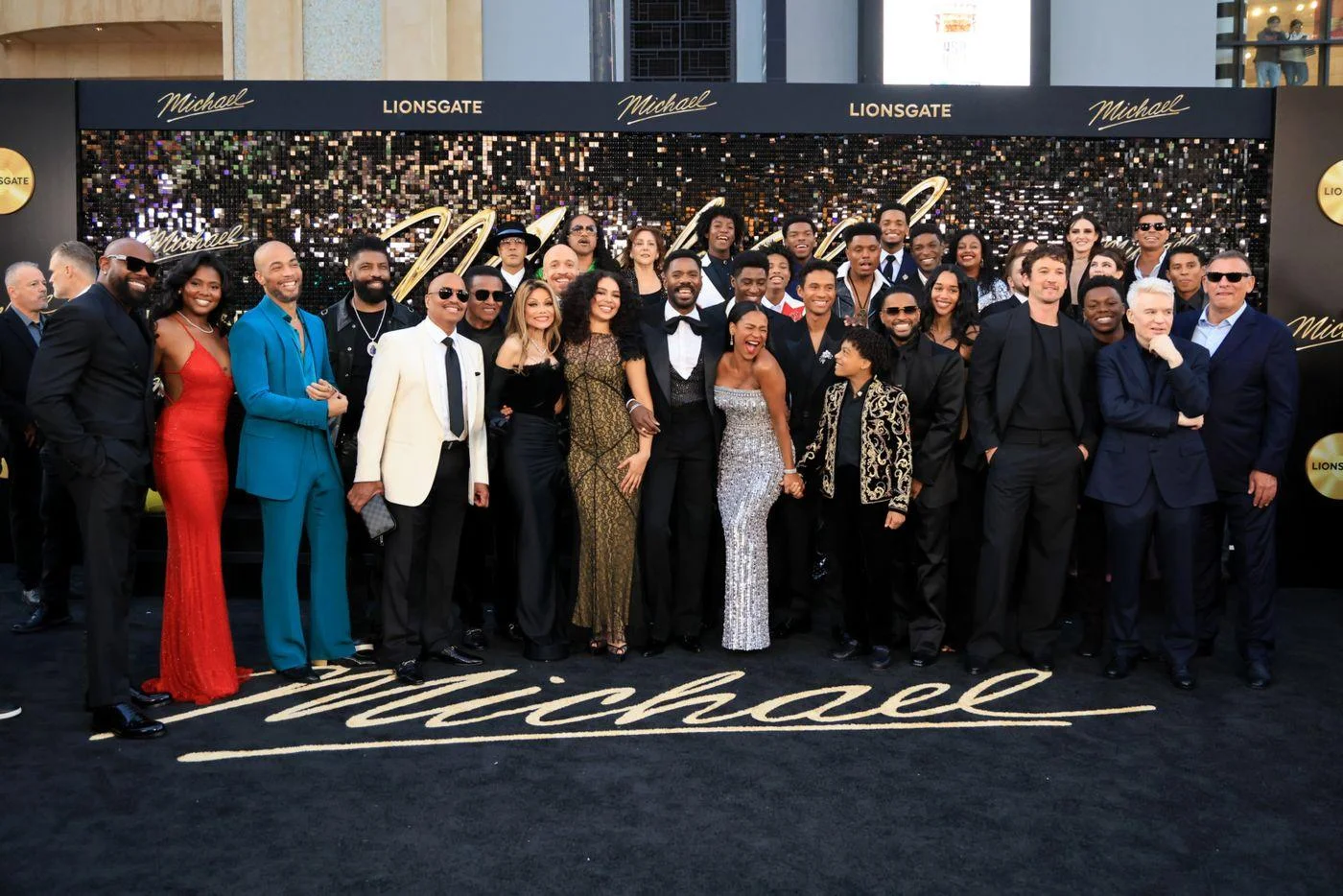
Director Antoine Fuqua guided the film through a complicated production history. The budget reportedly grew to around $200 million after reshoots removed all references to the sexual abuse allegations that followed Jackson after the period the film covers. The final cut ends with the start of the Bad World Tour, before any of those allegations arose.
Critics Said One Thing, Audiences Said Another
The critical split on this film is one of the most interesting stories of the year. Rotten Tomatoes settled the film at 38 percent from critics and 97 percent from audiences. That gap rarely appears that wide on any major release.
Critics argued the film plays like a sanitized greatest-hits package. Audiences simply did not care. They went back. Some multiple times.
By June, Michael had grossed more than $932 million worldwide, surpassing Bohemian Rhapsody’s $911 million to become the highest-grossing musical biopic of all time. A sequel is reportedly in development.
The film also sparked a genuine cultural debate about what biopics owe their subjects, their audiences, and history. That conversation is still running.
The Devil Wears Prada 2 Became a Genuine Phenomenon
Meryl Streep and Anne Hathaway Return After Twenty Years
The Devil Wears Prada 2 opened on May 1, 2026, and almost immediately became one of the surprise stories of the year. The sequel exceeded expectations in its opening weekend, grossing nearly $80 million. It passed the $450 million mark worldwide in just 10 days of release.
The original film came out in 2006. Twenty years later, Meryl Streep returned as Miranda Priestly alongside Anne Hathaway, Emily Blunt, and Stanley Tucci. The marketing leaned hard on nostalgia and it worked on a scale that surprised even the studio.
The Box Office Battle With Michael Was Genuinely Dramatic
For several weeks in May, Michael and The Devil Wears Prada 2 were trading the number one spot back and forth. Some weeks they were separated by less than two million dollars. Entertainment tracking sites were updating projections daily.
Michael eventually reclaimed the top position with a fourth weekend haul of $26.1 million, falling just 31 percent from the week prior while crossing $700 million worldwide. The Devil Wears Prada 2, meanwhile, kept performing well past when studios usually expect a sequel to fall off.
Both films demonstrated something the industry needs to hear more often: audiences still show up for movies that feel like events. They just need a reason to go.
The BAFTAs Produced a Night Nobody Will Forget Quickly
A Historic Acting Win That Brought the House Down
The 79th British Academy Film Awards took place on February 22 at London’s Royal Festival Hall. The defining moment of the night came from Robert Aramayo, who won Best Leading Actor for his role in I Swear.
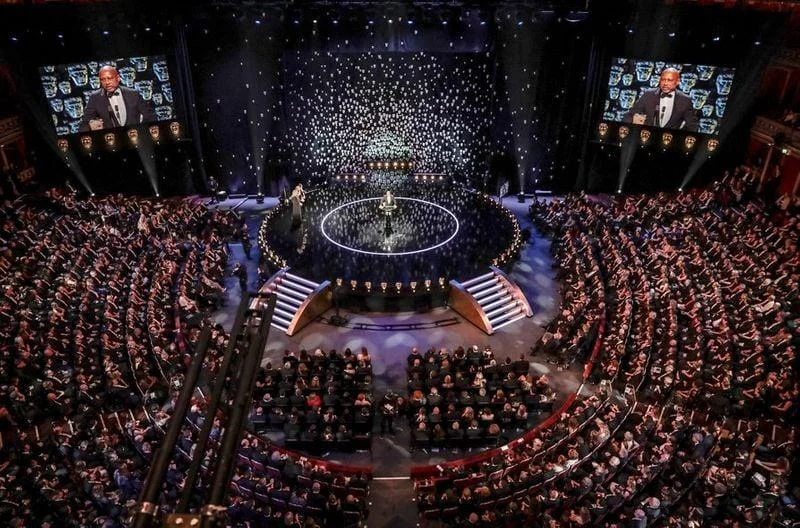
Aramayo became the first actor in BAFTA history to win both the EE Rising Star Award, voted for by the public, and Best Leading Actor in the same night. His victory was especially significant as he defeated high-profile A-listers Leonardo DiCaprio and Timothée Chalamet.
His father jumped to his feet in the audience the moment the win was announced. That moment circulated for days.
The Royal Family Red Carpet Created Its Own Headlines
Prince William and Princess Kate attended the BAFTAs together for the first time since 2023. Their appearance came just three days after Prince Andrew’s arrest, and the timing made every second of their red carpet walk the subject of intense analysis.
Body language experts offered opinions. Social media offered more. The couple appeared tense to many observers, though what they were actually feeling is something only they know.
Zendaya and Tom Holland Confirmed Their Wedding in the Most Understated Way Possible
This story played out over several months in a way that felt almost designed to frustrate people, and it was somehow more interesting for it.
How a Stylist Started It All
Speculation over whether the actors had officially tied the knot began when Law Roach, Zendaya’s stylist, said on the Golden Globes red carpet that their wedding had “already happened” and “it’s very true.” Roach’s revelation sent social media into a tailspin and resulted in viral AI-generated photos of Zendaya in a wedding dress.
Zendaya addressed the AI photos during a press tour appearance on Jimmy Kimmel. She told him that people in her personal life had been fooled by the fake images and were upset they had not received an invitation to a wedding that, to them, had clearly already happened.
Tom Holland Confirmed It With Four Words
The confirmation, when it came, was almost impossibly quiet. In an Esquire cover story, Holland was asked if he had to send messages to family members clarifying the AI photos. He responded: “No, because they were all there.”
The article noted that was the firmest Holland had been in the entire conversation, and they moved on. Four words. That was it.
The whole saga became a case study in how celebrity privacy and AI-generated content now collide in ways that blur real information from fabricated information for everyone, including people who personally know the couple.
The Taylor Swift and Travis Kelce Wedding Has the Entire Country Watching
No entertainment story in 2026 has generated more sustained coverage than this one, and as of late June, the wedding has not even happened yet.

An Engagement That Broke the Internet in August 2025
When Taylor Swift and Travis Kelce announced their engagement with a simple Instagram post in August 2025, it broke the internet. Swift released her 15th Billboard 200 number one album, The Life of a Showgirl, that October, moving a record-breaking 4 million equivalent album units in its first week.
In 2026, wedding planning became the dominant story. Details have leaked slowly and usually through indirect sources. A BBC Radio host mentioned being invited. Travis Kelce’s podcast guest made a comment that seemed to confirm the year. ESPN reported that Kelce planned to marry before football training camp starts on July 22.
The Wedding Is a Security and Logistics Operation Unlike Anything Seen Before
The wedding has easily become one of the most hyped pop culture events since Prince William’s 2011 royal wedding to Kate Middleton. The couple has kept almost every detail private, which has somehow only increased the media attention.
TMZ reported that the wedding is set for July 3 in Manhattan, with more than 1,000 guests expected inside Madison Square Garden. Separate reporting suggests the MSG event may be a celebration rather than the ceremony itself, with a private ceremony happening elsewhere.
New York City’s police commissioner mentioned a potential “Taylor Swift wedding” in a briefing about upcoming events requiring significant security presence, then tried to walk the comment back. The cat was already out of the bag.
Whatever happens on July 3, it will be the most-covered entertainment story of the summer.
How to Actually Keep Up With Entertainment News Without Losing Hours of Your Day
Pick Two or Three Sources and Stick With Them
The easiest mistake people make with entertainment news is trying to follow everything. You end up on seven different sites, reading the same story repeated with slightly different angles, and somehow knowing less than when you started.

Pick specific outlets whose coverage style matches what you want. Variety and The Hollywood Reporter cover film and television professionally, with sourcing. Deadline covers box office in serious detail. Billboard owns music industry coverage. Entertainment Weekly sits between the serious and the fun.
For real-time reaction and breaking moments, X and Reddit both work. The subreddits for specific shows, films, or artists often surface news before mainstream outlets catch it.
Set Up Google Alerts for Topics You Actually Care About
Google Alerts takes about three minutes to set up and delivers specific news directly to your email. Set one for a specific film, artist, or topic you follow closely and you stop missing the stories that matter to you while filtering out the noise that does not.
Apple News and Flipboard both let you customise feeds by topic and outlet. Spend ten minutes setting up a feed properly and your entertainment reading becomes a much more manageable daily habit.
What Makes 2026 Feel Different From Other Years
Every year has entertainment headlines. What makes this one feel different is the weight of the individual stories.
The Bad Bunny halftime show was not just a concert. It was a debate about language, identity, and whose culture gets the biggest stage in America. The Michael biopic debate is not just about box office. It is about what history owes to complicated figures and who gets to tell those stories. The Zendaya and Tom Holland saga raised real questions about AI and truth in a way that no planned campaign could have manufactured.
These are not soft celebrity stories. They connect to things people genuinely disagree about, care about, and think about beyond the entertainment section.
The year still has months left. Based on what has already happened, the list is only going to get longer.