

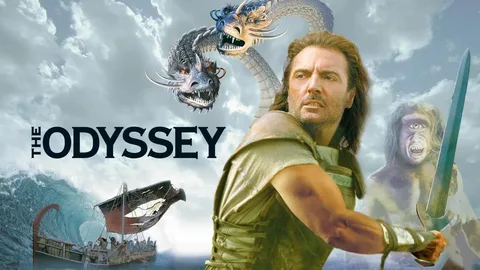
Few movies have generated as much anticipation in 2026 as The Odyssey. When Christopher Nolan announced that his follow-up to Oppenheimer would adapt Homer’s legendary Greek epic, excitement spread far beyond his usual fan base. Film enthusiasts, mythology lovers, and casual moviegoers were immediately intrigued by the idea of one of Hollywood’s most ambitious directors tackling one of the most influential stories ever written.
The expectations surrounding the film are enormous. Nolan has built a reputation for creating large-scale cinematic experiences that combine spectacle with thoughtful storytelling. Add a star-studded cast led by Matt Damon, cutting-edge IMAX filmmaking, and source material that has endured for thousands of years, and it becomes easy to understand why many people are calling The Odyssey the cinematic event of the year.
The Odyssey at a Glance
| Category | Details |
| Title | The Odyssey |
| Director | Christopher Nolan |
| Lead Actor | Matt Damon |
| Based On | Homer’s Odyssey |
| Release Date | July 17, 2026 |
| Genre | Epic Fantasy Action |
| Studio | Universal Pictures |
| Runtime | Epic Feature Film |
The film follows Odysseus, the king of Ithaca, as he attempts to return home after the Trojan War. His journey forces him to confront mythical creatures, dangerous temptations, hostile forces, and impossible decisions while his family waits for his return.
Why The Hype Reached Another Level
Every Christopher Nolan project attracts attention, but The Odyssey entered a different category long before its release.
Part of the excitement comes from the source material itself. Homer’s epic has inspired countless books, movies, and television adaptations. Yet few filmmakers have attempted to bring the story to the screen on the scale Nolan envisioned. The combination of mythology, adventure, survival, and human drama offers endless cinematic possibilities.
The cast also contributed significantly to the buzz. Matt Damon leads an ensemble that includes Tom Holland, Anne Hathaway, Robert Pattinson, Zendaya, Charlize Theron, Lupita Nyong’o, and Jon Bernthal. Few productions in recent memory have assembled this level of star power.
Major Reasons for the Hype
- Christopher Nolan directing
- Homer’s legendary source material
- Massive global production scale
- IMAX-first filmmaking approach
- All-star cast
- Practical location shooting
- Large production budget
Nolan’s Vision Feels Unlike Traditional Fantasy
One of the most fascinating aspects of The Odyssey is Nolan’s approach to mythology. Instead of presenting Greek legends as pure fantasy, he reportedly pursued a more grounded interpretation that blends realism with ancient supernatural beliefs.
This creative choice separates the film from many fantasy epics. Rather than relying entirely on computer-generated spectacle, Nolan appears committed to creating a world that feels tangible and believable. The result is a movie that often resembles a historical adventure while still embracing the mystery and wonder of Greek mythology.
Some viewers may initially find this approach surprising. Those expecting nonstop fantasy action could be caught off guard by the film’s emphasis on atmosphere, character psychology, and realism. Yet this decision gives the story a unique identity.
What Makes Nolan’s Approach Different?
| Traditional Fantasy | The Odyssey |
| Heavy CGI focus | Practical filmmaking emphasis |
| Constant spectacle | Character-driven storytelling |
| Clear fantasy elements | Grounded interpretation |
| Fast-paced action | Gradual tension building |
| Simplified mythology | Nuanced world-building |
Matt Damon Delivers One of His Strongest Performances
Casting Odysseus was arguably the most important decision of the entire production. The character must be intelligent, charismatic, resilient, flawed, and believable enough to carry a lengthy and emotionally demanding journey.
Matt Damon rises to the challenge impressively. His portrayal captures both the heroism and vulnerability that define Odysseus. Rather than presenting him as an invincible warrior, the film shows a man burdened by loss, responsibility, and the consequences of his decisions.
Damon reportedly underwent extensive physical preparation for the role, and that commitment is visible on screen. More importantly, he brings emotional depth to a character who could easily have become a one-dimensional action hero.
Strengths of Damon’s Performance
- Strong emotional range
- Convincing leadership qualities
- Physical credibility
- Excellent dramatic scenes
- Balanced portrayal of heroism and flaws
The Supporting Cast Rarely Misses
A film of this scale depends heavily on its supporting cast, and The Odyssey benefits from an exceptionally talented ensemble.
Tom Holland’s portrayal of Telemachus provides some of the film’s most emotionally engaging moments. His storyline offers a different perspective on the consequences of Odysseus’s absence. Rather than focusing solely on the hero’s journey, the film explores what happens to the people left behind.
Anne Hathaway brings grace and emotional complexity to Penelope, transforming what could have been a passive role into something much more substantial. Meanwhile, performers such as Robert Pattinson, Charlize Theron, Zendaya, and Jon Bernthal add memorable energy whenever they appear.
Standout Cast Members
| Actor | Character |
| Matt Damon | Odysseus |
| Tom Holland | Telemachus |
| Anne Hathaway | Penelope |
| Zendaya | Athena |
| Charlize Theron | Circe |
| Robert Pattinson | Antinous |
| Jon Bernthal | Menelaus |
The Visual Experience Is Extraordinary
If there is one area where The Odyssey unquestionably delivers, it is visual presentation.
The production was filmed across numerous international locations, including Greece, Italy, Iceland, Morocco, Scotland, and other visually striking environments. Rather than constructing everything on soundstages, Nolan’s team traveled extensively to capture authentic landscapes.
This decision pays off throughout the film. Mountains feel imposing. Oceans feel endless. Ancient settings feel lived-in rather than artificial. The environments become active participants in the story rather than simple backdrops.
Matt Damon himself described the production as one of the most ambitious filming experiences of his career, comparing the scale to making several movies simultaneously because of the diverse locations involved.
Visual Highlights
- Stunning ocean sequences
- Authentic international locations
- IMAX cinematography
- Large-scale practical environments
- Detailed production design
- Immersive world-building
Is It Nolan’s Most Ambitious Film?
Christopher Nolan has directed films involving dreams, black holes, time manipulation, historical events, and complex psychological mysteries. Yet there is a strong argument that The Odyssey represents his most ambitious undertaking.
The production reportedly became the most expensive film of Nolan’s career and the first to be shot entirely using IMAX 70mm cameras. That level of technical commitment reflects the scale of his vision.
What makes the project particularly challenging is its balancing act. The film must satisfy mythology fans, casual audiences, literary enthusiasts, and viewers expecting a blockbuster spectacle. Very few stories attempt to operate on so many levels simultaneously.
At its best, The Odyssey demonstrates why Nolan remains one of the few directors capable of convincing studios to invest heavily in original, non-franchise filmmaking.
Where The Odyssey Stumbles
For all its achievements, The Odyssey is not a flawless film. Some of the same qualities that make it ambitious can also make it challenging for certain viewers.
The most common criticism involves its pacing. Nolan takes his time developing characters, themes, and environments. While many viewers will appreciate the deliberate approach, others may find sections of the film slower than expected. Audiences anticipating nonstop action could be surprised by how much attention is given to dialogue, reflection, and emotional storytelling.
The film’s complexity may also divide viewers. Like several of Nolan’s previous projects, The Odyssey demands concentration. The narrative includes multiple storylines, mythological references, and thematic layers that reward attentive viewing but may overwhelm casual moviegoers seeking straightforward entertainment.
Potential Drawbacks
- Slower pacing in certain sections
- Dense mythological themes
- Long runtime
- Requires focused attention
- Less action than some viewers expect
The Runtime Won’t Be for Everyone
Epic stories often require significant screen time, and The Odyssey embraces that tradition completely. The journey of Odysseus spans years, multiple locations, and countless challenges. Compressing that narrative into a short runtime would have diminished much of its emotional impact.
Still, there are moments when the film feels its length. Certain sequences linger longer than necessary, and some secondary storylines receive more attention than they perhaps need. While these scenes contribute to the overall atmosphere, they occasionally slow the narrative momentum.
For viewers who enjoy immersive storytelling, the runtime is unlikely to feel excessive. Those who prefer faster-paced blockbusters may have a different experience.
Long Runtime: Pros and Cons
| Advantage | Disadvantage |
| More character development | Slower pace |
| Richer world-building | Demands patience |
| Greater emotional depth | Some scenes feel extended |
| Epic scale feels earned | Not ideal for every audience |
The IMAX Experience Is Worth the Ticket
If there is one recommendation that almost every viewer can agree on, it is this: watch The Odyssey on the biggest screen possible.
The film was designed specifically with IMAX presentation in mind. Vast landscapes, ocean voyages, ancient cities, and large-scale action sequences benefit tremendously from the format. The visual scope becomes difficult to appreciate fully on smaller screens.
Sound design also plays a significant role. The crashing waves, battle sequences, and musical score create an immersive atmosphere that enhances the experience considerably. Even viewers who are not usually concerned with premium formats may find the upgrade worthwhile for this particular film.
Why IMAX Makes a Difference
- Larger image presentation
- Greater visual detail
- More immersive sound
- Enhanced scale and spectacle
- Stronger emotional impact
How Audiences Are Reacting
One of the most interesting aspects of The Odyssey is how different groups of viewers respond to it.
Fans of Christopher Nolan’s previous work generally appreciate the film’s ambition, thematic depth, and visual craftsmanship. Many have praised it as another example of his commitment to large-scale filmmaking that respects audience intelligence.
Mythology enthusiasts often enjoy seeing Homer’s classic story treated with seriousness and respect. The adaptation takes creative liberties, but it remains surprisingly faithful to many of the source material’s core themes.
Casual blockbuster audiences appear more divided. Some are captivated by the film’s grandeur, while others find it slower and more demanding than expected. This is not necessarily a negative outcome. Great films often generate discussion rather than universal agreement.
Audience Reactions at a Glance
| Audience Type | General Response |
| Nolan Fans | Highly positive |
| Mythology Enthusiasts | Positive |
| Casual Moviegoers | Mixed to positive |
| IMAX Viewers | Extremely positive |
| Film Critics | Strong praise |
Strengths vs Weaknesses
Every major film has areas where it excels and areas where it falls short. Looking at both sides helps create a more balanced assessment.
The Odyssey Review Scorecard
| Strengths | Weaknesses |
| Exceptional visuals | Slow pacing at times |
| Strong performances | Dense storytelling |
| Ambitious direction | Lengthy runtime |
| Authentic locations | Requires patience |
| Emotional depth | Not action-heavy enough for some |
| Outstanding cinematography | Complex themes may divide viewers |
How It Compares to Nolan’s Previous Films
Comparing The Odyssey to Christopher Nolan’s earlier work is inevitable. While it shares some familiar traits, it also feels distinct from anything he has made before.
Unlike Inception, the story is emotionally straightforward. Also, unlike Tenet, it does not rely heavily on complicated mechanics. Unlike Oppenheimer, it embraces adventure and mythological spectacle.
What remains consistent is Nolan’s dedication to practical filmmaking, ambitious storytelling, and respect for audience intelligence. Those qualities continue to define his work.
Comparing Nolan’s Major Films
| Film | Primary Focus |
| Inception | Dreams and reality |
| Interstellar | Space exploration and family |
| Dunkirk | Survival during war |
| Oppenheimer | Historical character study |
| The Odyssey | Mythological epic adventure |
Is The Odyssey Worth the Hype?
The simple answer is yes, but with an important qualification.
If your expectation is a fast-paced fantasy blockbuster packed with nonstop action, the film may not fully satisfy you. Christopher Nolan approaches The Odyssey as an epic journey rather than a traditional action movie. Character development, emotional stakes, and atmosphere receive just as much attention as spectacle.
For viewers willing to engage with its slower moments and thematic depth, the rewards are substantial. The film delivers remarkable visuals, memorable performances, and a cinematic experience that feels increasingly rare in an era dominated by franchises and formulaic storytelling.
More importantly, The Odyssey feels significant. Whether you love every aspect of it or not, it is the kind of film people will likely discuss for years.
Final Rating Breakdown
Review Scores
| Category | Rating |
| Story | 9/10 |
| Acting | 9.5/10 |
| Visuals | 10/10 |
| Cinematography | 10/10 |
| Sound Design | 9.5/10 |
| Pacing | 8/10 |
| Rewatch Value | 9/10 |
| Overall Score | 9.2/10 |
Frequently Asked Questions
1. Is The Odyssey based on a true story?
No. The film is based on Homer’s ancient Greek epic poem, which combines mythology, legend, and literary storytelling.
2. Do I need to know Greek mythology before watching?
Not at all. The film provides enough context for newcomers while still offering depth for mythology enthusiasts.
3. Is The Odyssey suitable for casual moviegoers?
Yes, although viewers should be prepared for a thoughtful and relatively long cinematic experience rather than a simple action film.
4. Is IMAX necessary for the best experience?
While not required, IMAX significantly enhances the film’s visuals, scale, and sound design.
5. Is this Christopher Nolan’s best movie?
That depends on personal preference, but many viewers consider it among his most ambitious and visually impressive achievements.
Conclusion:
The Odyssey succeeds because it refuses to take the easy path. Rather than simplifying one of history’s greatest stories into a conventional blockbuster, Christopher Nolan delivers a thoughtful, visually stunning, and emotionally engaging epic that respects both its source material and its audience. It may not appeal equally to everyone, but for those willing to embrace its journey, the experience is more than worthy of the enormous anticipation surrounding it.
Call to Action
Have you watched The Odyssey yet, or is it still on your must-see list? Share your thoughts, compare your favorite Christopher Nolan films, and join the conversation surrounding one of the year’s most ambitious cinematic releases. Some movies entertain for a few hours, while others leave audiences debating them long after the credits roll.