


My cousin Daniyal texted me a three-paragraph voice note last October. Not an actual voice note, just a very long text message written in the way people talk when they are excited about something. It was entirely about the Devil Wears Prada 2 trailer.

He had watched it four times. He listed the outfits. He had opinions about Emily Blunt’s hair. He ended with “I don’t even care about fashion but I am GOING opening weekend.”
Daniyal works in logistics. He has never voluntarily read a fashion magazine in his life. And here he was, fully consumed by a sequel to a 2006 romantic comedy about a woman who works at a magazine.
That is when I realized 2026 was going to be different from the last few years at the cinema. Not because every film is going to be great, some will flop spectacularly, that is how movies work. But because there are films on this year’s calendar that are generating the kind of genuine, cross-audience excitement that has been mostly missing since before the pandemic scrambled everything.
I have been following the 2026 slate closely since last autumn. I track box office numbers the way some people follow football scores. Here is what I actually think about the films that are going to dominate conversations this year, based on what has already happened and what is still coming.
The Devil Wears Prada 2 Already Proved Something Important
This film came out in May and it matters not just as a movie but as a signal.
The original Devil Wears Prada from 2006 was not a superhero film. It was not based on a comic book or a video game. It was a drama-comedy about workplace dynamics and identity, anchored by Meryl Streep doing something so specific and controlled that people still quote the performance twenty years later.
The sequel brings back Meryl Streep as Miranda Priestly, Anne Hathaway as Andy, Emily Blunt, and Stanley Tucci. The story picks up with Miranda navigating the collapse of print media and a confrontation with the digital world that replaced it. Hathaway and Blunt are reportedly on opposite sides of that conflict.
Before a single person had seen the film, the trailer pulled 222 million views in 24 hours. That made it the most watched trailer in 20th Century Studios’ entire history. The premiere at Lincoln Center had Lady Gaga in the audience alongside designers like Marc Jacobs. That is not a normal level of cultural noise for a sequel that nobody asked for.
What it proved is that audiences are not exclusively interested in films with flying characters and CGI battles. They want stories they care about, with actors they trust, and a reason to feel something. Devil Wears Prada 2 delivered that before anyone even bought a ticket.
Toy Story 5 Is Already in the History Books
It already opened. Father’s Day weekend, June 2026. Domestic opening of 160 million dollars. Worldwide opening of 312 million. Second biggest animated film opening in history, behind only The Incredibles 2.
The film is about Woody, Buzz, Jessie, and the rest of the gang encountering a new smart tablet called Lilypad that starts competing for Bonnie’s attention. Tom Hanks, Tim Allen, Joan Cusack, all back. The emotional pull of the Toy Story franchise doing something that actually reflects how childhood has changed hit people in a way they were not fully prepared for.
I went with my brother and his two kids. The kids laughed through most of it. My brother, a fully grown adult man who fixes industrial equipment for a living, cried during the third act. He denied this later. I have witnesses.
The film’s Monday numbers after opening weekend were the highest single-day total of 2026 so far. It is heading toward a billion dollars. For Pixar, which has had a rough few years where films went straight to Disney Plus without a proper theatrical run, this feels like a proper comeback.
The Odyssey Is the One Film People Cannot Stop Arguing About
Christopher Nolan is adapting Homer’s Odyssey. The story of Odysseus trying to get home after the Trojan War, encountering the Cyclops, the Sirens, Circe, and a decade of catastrophe along the way.

The cast is genuinely absurd in the best possible way. Matt Damon as Odysseus. Tom Holland. Zendaya. Lupita Nyong’o. Robert Pattinson. Charlize Theron. John David Washington. It looks like someone gave Nolan a list of every working actor people actually want to watch and said yes to all of them.
The film has every IMAX screen locked up. The IMAX presale tickets sold out in under 24 hours when they went on sale. Nolan’s name alone does something to audience expectation that almost no other director alive can replicate. Since Interstellar and Dunkirk and then Oppenheimer becoming the highest-grossing R-rated film in history, people have learned to simply show up.
The arguing part comes from some of the casting choices. A film set in ancient Greece with a diverse cast has generated the kind of online debate that always seems to follow Nolan projects now. Some people think it is a creative modern reinterpretation. Others feel strongly that it should be historically grounded. Both camps are talking about it constantly, which means almost everyone knows the film exists before seeing a single frame.
The film opens July 17. I already have my ticket. I booked it the day they went on sale, which is not something I have done since No Way Home in 2021.
Spider-Man Brand New Day Is Carrying an Enormous Amount of Pressure
The presale numbers for this film, opening July 31, are the best first-day presale figures for any movie in five years. The last time numbers like this appeared was Spider-Man No Way Home, which opened with 260 million dollars domestically and became the third highest opening weekend in history.
The new film follows Peter Parker starting completely fresh. The world has forgotten who he is after the events of No Way Home. Tom Holland is back. Zendaya returns. The Punisher and the Hulk are reportedly part of the story. Director Destin Daniel Cretton, who made Shang-Chi, is helming it.
The pressure comes from two directions. First, Marvel has had a genuinely rough few years. Thunderbolts and Captain America Brave New World both underperformed. The Fantastic Four did okay but not spectacularly. Spider-Man is the one Marvel character who seems immune to audience fatigue, but that immunity is not infinite.
Second, the film is opening without IMAX screens because The Odyssey has all of them committed through its run. That is real money left on the table and a real statement about the film’s faith in its own audience appeal without the premium screen advantage.
Prediction market traders currently give Brand New Day about a 54 percent probability of finishing as the year’s top domestic earner. That is a number worth paying attention to even if you think prediction markets are imperfect, because a lot of people with genuine financial stakes in the outcome believe it.
Avengers Doomsday Is the One Everyone Has Been Waiting Six Years For
The last proper Avengers film was Endgame in 2019. That film made 2.79 billion dollars worldwide and briefly held the record as the highest-grossing film of all time. Then Marvel had a rough phase. A very rough phase.

Doomsday, opening December 19, is the reset. Robert Downey Jr. is back, not as Tony Stark but as the villain Doctor Doom. Chris Evans is back as Steve Rogers. The X-Men are folded in. The Fantastic Four are there. This is the first genuine Avengers ensemble film since Endgame and the cast alone justifies the six-year wait.
The December timing makes it interesting. No Avengers film has ever opened during the holiday season. It normally would be a summer movie. Moving it to December means it needs to accumulate numbers over Christmas, New Year, and into January to compete with films that opened in July and have months of head start.
On the same day, December 19, Denis Villeneuve’s Dune Part Three also opens. The internet is already calling it Dunesday, a reference to Barbenheimer from 2023 when Barbie and Oppenheimer opened the same weekend and somehow made each other bigger. If that same phenomenon happens here, theaters on that date will see numbers that have not existed since Endgame.
Robert Downey Jr. has said publicly that the production team labored over making this film not feel like a letdown after Infinity War and Endgame. That is either a reassuring sign of awareness or a careful management of expectations. Probably both.
The Adventures of Cliff Booth Is the Wildest Film on the Calendar
This one is difficult to explain without it sounding made up.
Quentin Tarantino wrote a sequel to Once Upon a Time in Hollywood, his 2019 film about a fading TV actor and his stuntman during the Manson murders era in 1969. Brad Pitt won a Supporting Actor Oscar for playing the stuntman, Cliff Booth. Tarantino did not want to direct the sequel himself because he has said he wants his actual final film to be something original. So he gave his script to David Fincher.
David Fincher. Director of Fight Club, Se7en, Zodiac, The Social Network, Gone Girl. That David Fincher.
The film is set in 1977, eight years after the original, and follows Cliff Booth’s life as a Hollywood fixer. The supporting cast includes Elizabeth Debicki, Carla Gugino, Yahya Abdul-Mateen II, Peter Weller, and Timothy Olyphant. It opens theatrically November 25 and lands on Netflix in December.
A Tarantino-written, Fincher-directed, Brad Pitt-led film set in 1970s Hollywood is not a sentence that should exist. But it does. It is real. The film is finished. It is coming out.
This might be the film I am most personally excited about on the entire 2026 calendar, which is saying something given that I have a reserved IMAX seat for The Odyssey already.
Disclosure Day Is Steven Spielberg Coming Back to His Roots
Spielberg has not made a proper science fiction alien invasion film since the 2005 War of the Worlds. He is 79 years old. Disclosure Day is being called a return to his roots, a film about government disclosure of alien contact, in the tradition of Close Encounters of the Third Kind.
The trailer does not give much away. It feels deliberately old-fashioned in the best sense, practical sets, real locations, the kind of tension-building that Spielberg built his career on before CGI made everything about spectacle.
When Spielberg returns to a genre he invented, people pay attention. The man directed Jaws and Close Encounters in the 1970s and essentially created the summer blockbuster as a concept. A film that places him back in that territory carries a weight that is hard to quantify.
The Film I Think Is Being Underestimated
Everyone is focused on the massive franchise titles. Understandably so. But The Adventures of Cliff Booth aside, the 2026 film I think is being slept on is The Drama, directed by Kristoffer Borgli.
Borgli made Dream Scenario and Sick of Myself, two of the most genuinely strange and original films of the last several years. The Drama stars Zendaya and Robert Pattinson as a couple a week before their wedding, with their relationship unraveling in ways the trailers are deliberately keeping vague. It is being released by A24.
A24 has built a specific kind of audience trust at this point. Their films do not always make enormous money, but they generate cultural conversation that outlasts the theatrical run by years. Hereditary, Midsommar, Everything Everywhere All at Once. The Drama has the combination of a director with real vision, two of the most interesting actors working right now, and a studio that knows how to make a film feel like an event even without a nine-figure budget.
If it is as good as the early signs suggest, it will be in the awards conversation at the end of the year and people will still be arguing about the ending in 2027.
How to Actually Plan Your Cinema Year Around This Slate
If you want to see most of these without burning through your budget all at once, the release calendar gives you some natural spacing.
Devil Wears Prada 2 already happened in May. Toy Story 5 opened in June. The Odyssey hits in July, followed immediately by Spider-Man Brand New Day two weeks later. Then there is a quieter August before Ridley Scott’s The Dog Stars arrives. Autumn brings Digger with Tom Cruise doing a Nolan-directed comedy, and The Adventures of Cliff Booth in November. December brings Avengers Doomsday and Dune Part Three on the same day.
That is a genuine full year of films worth leaving the house for, spread across twelve months.
For tracking which films are getting the best audience reactions in real time, the Letterboxd app is genuinely useful. It is where film enthusiasts log every film they watch and rate them immediately after, which gives you real audience response faster than most professional review outlets. Reddit’s r/movies thread on any major opening weekend is also worth checking if you want unfiltered reaction before committing to a ticket.
Fandango and the AMC app let you book in advance for films with high demand. For The Odyssey and anything with IMAX availability, booking at least a week ahead is worth doing based on how fast the presales went.
The One Thing This Year’s Slate Got Right
The 2026 film calendar is not wall-to-wall superhero films. That has been the criticism of Hollywood for most of the last decade, fair or not. This year has two genuine Avengers-adjacent releases but also a Nolan epic, a Spielberg comeback, a Fincher crime film written by Tarantino, an A24 relationship drama, and a fashion-world sequel that broke trailer records before anyone had seen five minutes of footage.
The variety is what makes this feel like a real cinema year rather than a franchise delivery schedule.
My cousin Daniyal is already asking what we should see next after he goes to Devil Wears Prada 2 opening weekend. I sent him a list. He read it and said he needed to buy a bigger sofa for the films he would rather stream.
I told him to stop watching things on a laptop screen and come to the cinema.
He is coming for The Odyssey. I told him to book the IMAX seats before they are gone.
He is still deciding.
The Art of Minimalist Living for a More Meaningful Life
Three years ago I moved into a new flat and spent the first weekend unpacking boxes. By Sunday evening I had filled every shelf, covered every surface, and hung things on every wall. The place looked exactly like the flat I had just left, which is to say it looked like a storage unit someone had tried to make cozy.

Standing in the middle of all of it, surrounded by stuff I had owned for years without really thinking about it, I felt a specific kind of tired that had nothing to do with the move. It was the tiredness of looking at everything I owned and feeling owned by it.
My friend Raheel had visited that afternoon to help me carry boxes. He looked around at the finished result and said something I did not appreciate at the time. He said it looked exhausting. He had been living with about a third of what I owned for the past two years. His flat was quieter, emptier, and noticeably easier to be inside. I had always assumed that was just his personality. Turns out it was a decision he had made deliberately, and the reasons behind it were more interesting than I expected.
That conversation started something that has genuinely changed how I live. Not in a dramatic, sell-everything-and-move-to-a-van way. Just in a slow, practical, surprisingly difficult process of figuring out what actually needs to be in my life and what is just there because I never thought hard enough about removing it.
This is what I learned.
Why Most People Have More Than They Realize
The average person in a developed country owns somewhere between several hundred and several thousand individual objects. Most people, if asked, would say they do not think of themselves as someone who owns a lot. Then they try to move flats and spend three days carrying boxes of things they forgot they had.
This happens for a specific reason. Acquiring things is easy and almost frictionless. Removing them requires a decision, and decisions take energy. So the default is always accumulation. Things come in and rarely leave unless something forces the issue.
The result is a slow, invisible kind of weight. Not just physical clutter but mental clutter. Every object in your environment is a small background task running in your mind. The coat you keep meaning to repair. The books you intend to read. The equipment for the hobby you stopped doing eighteen months ago. None of it is loudly demanding your attention. All of it is quietly taking up a small amount of it.
Minimalist living is not really about owning fewer things for the sake of aesthetics or following a trend. It is about recognising that everything you own has a cost beyond what you paid for it. It costs you space. It costs you attention. It costs you the mental load of managing and maintaining it. And once you start accounting for those costs honestly, some of what you own stops making sense.
What Raheel Actually Did and Why It Worked
When Raheel explained his approach to me it was less philosophy and more practical frustration. He had moved four times in six years, each time carrying more boxes than the time before, and after the fourth move he sat down and decided he was done moving things he did not actually use or love.

He did not read a book about minimalism or follow a particular method. He just went through everything he owned and asked one question: does this earn its place?
Not whether he might need it someday. Not whether it was expensive or a gift. Not whether getting rid of it would be wasteful. Just whether it was actually doing something useful in his life right now, or whether it was just occupying space on the off chance it might matter one day.
He got rid of a lot. Clothes he had not worn in over a year. Kitchen gadgets that sounded good when he bought them and sat unused in a drawer. Books he had bought with the intention of reading and had moved three times without opening. Furniture that filled rooms without being used.
What he described afterward was not deprivation. He said the flat felt lighter. Not just visually, but the way it felt to be inside it. He was not managing as much. He was not doing the low-level mental inventory of things he was meant to get around to. The space he lived in matched the way he actually lived, rather than the way he imagined he might live someday.
How to Actually Start Without Overwhelming Yourself
The biggest mistake people make when they decide to try minimalist living is treating it like a project that needs to be finished. They set aside a weekend, plan to do the whole house at once, get three hours in, feel overwhelmed by the decisions, and stop.
It does not work that way. Or at least, it does not work that way for most people.
A more sustainable approach is to start with one category, something small and low-stakes, and do it properly before moving to the next.
Clothes are usually the easiest starting point because the decision criteria are relatively clear. If you have not worn it in twelve months, it has already answered the question of whether it earns its place. There are exceptions, things you genuinely only wear for rare occasions, but those are easy to identify and keep.
The method that most people find useful is pulling everything out of the category at once rather than going through things where they live. When you pull every item of clothing out of every drawer and wardrobe and see it all together in one place, the volume becomes visible in a way it never is when things are distributed across different spaces. Decisions become easier when you can see the full picture.
For each item, the question is simple. Have you worn it in the past year? Do you actually like it or do you just own it? Does it fit and work properly? If the answer to those questions is no or uncertain, it goes.
After clothes, kitchen items are usually next. Then books. Then general household objects. Then the harder categories like sentimental items, which deserve more time and more patience.
The Things Nobody Warns You About
The first thing is that getting rid of things feels worse before it feels better.
The initial clear-out produces a specific kind of anxiety. You second-guess decisions. You take things out of the donate pile and put them back. You start imagining scenarios where you will desperately need the thing you are removing. This is normal and it passes. The anxiety about removing something is almost never proportional to how much you actually needed it. If you genuinely can not remember the last time you used something, the chance of urgently needing it after removing it is very small.
The second thing is that the process reveals spending habits you would rather not confront. When you look at the sheer volume of things you own that you do not use, it is hard not to do the rough maths of what those things cost. That is uncomfortable. It is also useful information going forward.
The third thing is that other people will sometimes have opinions. Family members who notice you have got rid of things. Friends who interpret it as a critique of how they live. Partners who are at a different point in the process and feel rushed or judged. The minimalist approach works best when it is a personal decision that extends outward with patience rather than something you try to impose.
Digital Clutter Is Real and Most People Ignore It
Physical stuff gets most of the attention in conversations about minimalism, but digital clutter operates on the same principle and most people are carrying an enormous amount of it.
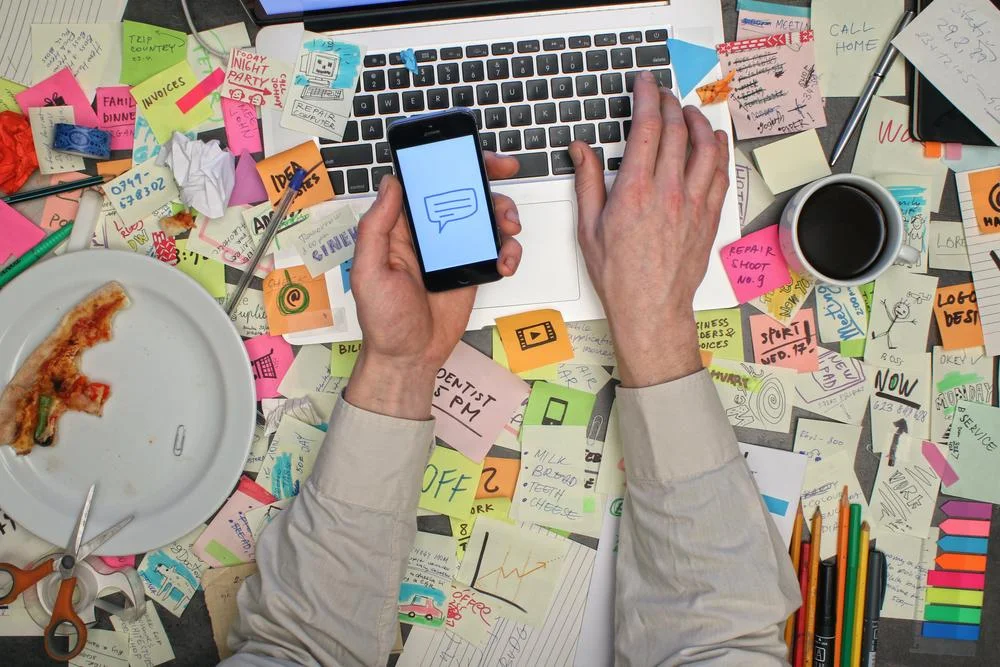
The average smartphone has dozens of apps that have not been opened in months. Email inboxes with thousands of unread messages. Photo libraries with tens of thousands of images, many of them duplicates or blurred or pictures of things that made sense to document at the time and mean nothing now. Subscriptions to services that charge every month and go largely unused.
All of it operates as the same kind of low-level mental load as physical clutter. The notifications from apps you do not use. The subscriptions you mean to cancel. The inbox you mean to clear.
Going through your phone and removing apps you have not used in the past three months takes about twenty minutes and makes the device noticeably easier to navigate. Unsubscribing from email lists using a service like Unroll.me takes an afternoon and permanently reduces the noise. Going through subscriptions and cancelling things you are not actively using saves real money alongside the mental quiet.
None of this is dramatic. But the accumulative effect of clearing digital clutter tends to feel similar to clearing physical clutter. Less noise. Less management. More attention for the things that actually matter.
What Minimalism Is Not
It is not about owning as little as possible as a competition. Some people have taken minimalism to an extreme where the goal is reducing object count to a specific number, fifty things, one hundred things, whatever the rule is. That is a personal choice and it works for some people, but it is not what makes minimalist living meaningful for most people.
It is not about living in a white room with no character. The aesthetic of minimalism in interior design, bare walls, no colour, nothing personal, is one interpretation of the concept and not a requirement. The point is owning things you actually use and value, not conforming to a visual style.
It is not a permanent moral position you have to maintain perfectly. Some periods of life require more stuff. Having children adds objects to your home in ways that are not optional. Moving to a new city sometimes means acquiring things you need for a specific situation. Life changes and the contents of a life reasonably change with it.
The underlying idea is just intentionality. Thinking about what you bring into your life and whether it genuinely belongs there, rather than accumulating by default and never questioning the result.
The Unexpected Places It Starts to Show Up
Something Raheel mentioned that I did not fully understand until I experienced it myself is that once you start thinking this way about physical objects, the same lens tends to apply to other parts of life.

Commitments you said yes to out of habit or obligation rather than genuine interest. Social obligations that drain more than they give. Digital habits that fill time without adding anything. Work projects that feel important on paper but do not actually connect to what matters to you.
None of these are easy to remove from a life the way an unused kitchen gadget is easy to remove from a drawer. But the practice of asking whether something earns its place, of being honest about whether something is adding to your life or just taking up space in it, is the same question regardless of what you are applying it to.
A friend of mine who went through a similar process a few years ago described it as learning to be a more honest accountant of her own life. She was not auditing herself to find fault. She was just getting a clearer picture of what was actually there versus what she assumed was there.
A Practical Starting Point for This Week
If none of this has felt actionable yet, here is the simplest possible place to begin.
Pick one drawer in your home. Any drawer. Pull everything out of it. Go through each item and ask whether it belongs there or whether it ended up there because you did not know where else to put it. Throw away anything broken or expired. Put back only things that are genuinely used. Everything else gets dealt with properly, donated, recycled, or moved to where it actually belongs.
That drawer is not going to change your life. But the decision-making practice is the same one you will use for everything else. And finishing something small properly feels different from leaving a bigger project half-done.
Raheel still lives in the same flat. It is still quiet and easier to be in than most places I have visited. He told me recently that the main thing minimalism gave him was not space or money, though it gave him both of those too. It was the feeling that the life he was looking at was actually the life he had chosen, rather than one he had accumulated by accident.
That distinction turns out to matter more than I expected.
It still does.