

My dad called me at eleven at night once, years ago, just to say “turn on the TV, Catch Me If You Can is on.” He wasn’t asking. He was telling me to drop whatever I was doing because he wanted someone to watch it with him, even over the phone from two states away.

That’s the thing about movies based on true stories. They don’t just entertain you for two hours and disappear from your brain the next morning. They stick. You bring them up randomly at dinner. You mention them to coworkers. Sometimes you Google the real people involved at one in the morning because the movie left you with questions the credits didn’t answer.
I’ve spent an unreasonable amount of time doing exactly that. Falling into research holes after watching a film, comparing what actually happened to what got dramatized, reading old newspaper clippings just to see how close the script stayed to reality. So this isn’t a generic “top ten movies” list copied from somewhere else. This is what I’ve actually watched, rewatched, and occasionally paused mid-scene to fact-check on my phone.
Why True Story Movies Hit Different
There’s a reason these films tend to outperform pure fiction when it comes to emotional impact.
Fiction can be brilliant, don’t get me wrong. But when you know a person actually survived what you’re watching, or actually made the choices you’re seeing on screen, something shifts in how you experience it. The stakes feel real because they were real.
I noticed this myself watching Erin Brockovich for the first time. Halfway through, I paused the movie and looked up whether Erin Brockovich was an actual person, half expecting the answer to be no. When I found out she’s real, still alive, still working as a legal advocate, the entire second half of the movie hit differently. Suddenly it wasn’t just Julia Roberts doing a great performance. It was a recreation of someone’s actual fight against a company that poisoned an entire town’s water supply.
That’s the power true stories have. They turn passive viewing into something closer to witnessing.
The Movies That Actually Stuck With Me
I’m not going to list every biopic ever made. Instead, here’s a rundown of films based on true events that genuinely left a mark on me, along with why they worked and what I took away from each one.
Catch Me If You Can

Steven Spielberg directed this one, and it’s loosely based on the life of Frank Abagnale Jr., a con man who impersonated a pilot, a doctor, and a lawyer, all before turning twenty-one, while forging millions of dollars in checks along the way.
What gets me about this movie isn’t just the heists or the disguises. It’s the relationship between Abagnale and the FBI agent chasing him, played by Tom Hanks. There’s a scene near the end where the two of them talk on the phone every Christmas Eve, and it turns what could’ve been a straightforward crime thriller into something almost tender.
I did learn later that some parts of Abagnale’s own account have been questioned over the years, with journalists digging into how much of his story he may have exaggerated. That’s actually kind of fascinating on its own. The movie is based on his autobiography, and even the “true story” behind a true story movie can have layers of embellishment worth researching separately.
Lesson learned: always check whether a true story movie is based on a memoir versus journalistic reporting. Memoirs are told from one person’s memory and perspective, so treat them with a bit more skepticism than a documentary sourced from court records or multiple witnesses.
Erin Brockovich

I already mentioned this one above, but it deserves its own breakdown because of how well it balances legal drama with genuine character work.
Julia Roberts plays a single mother who, with zero legal background, ends up building a case against Pacific Gas and Electric Company for contaminating a small town’s water supply with hexavalent chromium, causing serious health problems for residents.
What makes this movie work isn’t a courtroom full of dramatic objections. It’s watching someone underestimated by everyone around her prove she’s smarter and more persistent than the professionals dismissing her. The real case settled for 333 million dollars, which at the time was the largest settlement ever paid in a direct action lawsuit in U.S. history.
If you want a deeper dive after watching, look up the actual case documents or even the follow-up reporting on the town of Hinkley, California, years later. The movie ends on a triumphant note, but the real aftermath for the town is more complicated than the film has time to cover.
Hidden Figures

This one follows three Black women working at NASA during the early 1960s space race, whose mathematical work was essential to launching astronauts into orbit, despite the segregation and discrimination they faced daily.
I watched this with my mom, and neither of us knew going in how much of the actual space program’s success depended on human computers, specifically women who were doing calculations by hand before electronic computers were reliable enough to trust.
The movie takes some dramatic liberties for pacing, certain timelines get compressed and a few scenes are composites rather than literal events. But the core truth of what these women accomplished, and the barriers they had to break through to do it, is completely real and documented.
What I took from it: sometimes the most important people in a historic achievement are the ones history books conveniently leave out. It made me want to actually research other contributors to major scientific milestones who never got proper credit.
Molly’s Game

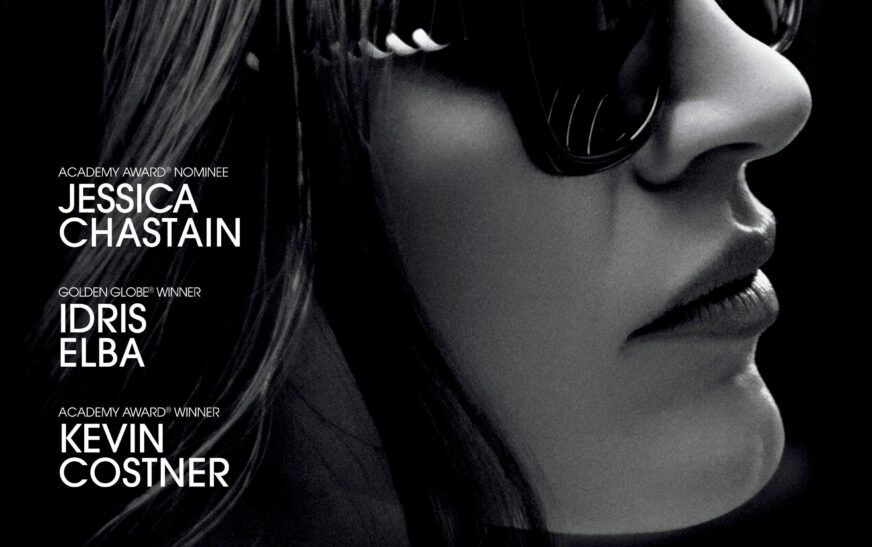
Jessica Chastain plays Molly Bloom, a former Olympic-level skier who ended up running high-stakes underground poker games attended by celebrities, athletes, and eventually people connected to organized crime, which led to a federal investigation.
What I love about this movie is how it never treats Molly as either a pure victim or a pure villain. She made choices, some of them clearly bad ones, but the film lets you understand exactly why she made them without excusing the consequences.
Aaron Sorkin wrote and directed this one, and if you’ve seen any of his other work you’ll recognize his rapid-fire dialogue style immediately. It’s dense, but it rewards attention.
After watching, I actually read parts of Molly Bloom’s real memoir, which the movie is based on, and found the tone surprisingly different. The book leans more into her internal guilt and anxiety, while the movie plays up the glamour a bit more before the walls close in.
I, Tonya
This one covers the life of figure skater Tonya Harding, specifically the infamous 1994 incident where a rival skater, Nancy Kerrigan, was attacked in a plot connected to people in Harding’s inner circle.
What makes this film stand out is its structure. It uses conflicting accounts from different people involved, presented almost like mockumentary interviews, which forces you to realize you might never actually know the full truth. Everyone remembers it differently, and everyone has a reason to shade their version favorably.
Margot Robbie’s performance is genuinely one of the best in this entire list, and the skating sequences are shot in a way that makes you feel the physical toll of competitive figure skating rather than just admiring it from a distance.
Unexpected result for me: I went in already having an opinion about Tonya Harding from what I vaguely remembered growing up, and the movie completely reshaped how I thought about her, her abusive home life, and how much of the public narrative around her was shaped by classism.
Schindler’s List
I need to be careful writing about this one because it’s not a casual watch, and I don’t want to make it sound like light entertainment. It isn’t. It’s heavy, difficult, and important.
The film follows Oskar Schindler, a German businessman and member of the Nazi party, who ends up saving over a thousand Jewish refugees during the Holocaust by employing them in his factories, ultimately spending his entire fortune protecting them.
I watched this alone the first time, which in hindsight was probably a mistake. Some movies you genuinely need someone next to you afterward, just to sit in silence together or talk it through. This is one of those.
What struck me most wasn’t the horror, though there’s plenty of that. It was the moral complexity of Schindler himself. He wasn’t a saint from the beginning. He was a man who initially profited from exploiting cheap labor and slowly, through witnessing atrocity firsthand, transformed into someone willing to risk everything to save lives.
If you watch this, give yourself space afterward. Don’t schedule something immediately after it ends. You’ll need the time to process it.
The Social Network
This one follows the founding of Facebook and the legal battles that followed between Mark Zuckerberg and the people who claimed he stole their idea or cut them out of the profits.
What’s interesting about this movie is how contested its accuracy actually is. Zuckerberg himself has pushed back publicly on how the film portrays him, and several details are dramatized or compressed for narrative effect. The screenplay by Aaron Sorkin was based largely on the book “The Accidental Billionaires,” which itself has been criticized for taking creative liberties with dialogue and internal thoughts nobody could have actually documented.
I bring this up because it’s a good reminder that “based on a true story” exists on a spectrum. Some films stick incredibly close to documented fact. Others use real events as a skeleton and build a mostly fictional body around it. The Social Network sits somewhere in the middle, closer to fictionalized interpretation than documentary reenactment.
The Blind Side
This film tells the story of Michael Oher, a homeless teenager who was taken in by a wealthy family and went on to become a successful NFL offensive lineman, largely due to their support and his own determination.
The movie was a massive box office success and won Sandra Bullock an Oscar. But here’s something that genuinely surprised me. Years after the movie’s release, Michael Oher himself spoke out publicly, stating that the family’s portrayal in the film oversimplified his story and that the actual legal arrangement between them was more complicated than a simple adoption, involving a conservatorship rather than legal guardianship in the way the film implies.
Lesson learned here, and it’s an important one: just because a movie is emotionally satisfying doesn’t mean it’s fully accurate, and sometimes the real subject of the story ends up feeling misrepresented by the very film meant to honor them. It’s worth reading interviews with real people involved after watching, especially with more recent true story adaptations, since those subjects are often still alive and able to speak for themselves.
How I Actually Research These Movies After Watching
I’ve developed a bit of a routine over the years for digging into true story movies once the credits roll. If you want to do the same thing, here’s roughly how I go about it.
Step one: search the person’s name plus “real story.” This usually pulls up interviews, articles, or documentaries where the actual person discusses the events themselves.
Step two: check if there’s a book the movie is based on. Films like Molly’s Game, Catch Me If You Can, and The Blind Side are all based on memoirs or nonfiction books. Reading even a summary of the source material tells you what got changed for the screen.
Step three: look for documentaries covering the same events. Streaming platforms like Netflix, Hulu, and HBO Max frequently have companion documentaries that go deeper than a two-hour film ever could. After watching I, Tonya, I found an ESPN 30 for 30 documentary on Tonya Harding that added a ton of context the movie didn’t have time for.
Step four: read reviews from people who were actually there, if possible. For historical events with living witnesses, you’ll sometimes find firsthand accounts on Reddit threads or in old interviews that add nuance no movie script can capture.
Step five: separate emotional impact from factual accuracy. A movie can move you deeply and still take major liberties with the truth. Both things can be true at once, and recognizing that keeps you from either dismissing a great film or blindly trusting every detail as gospel.
Common Mistakes People Make Watching True Story Films
I’ve made every single one of these mistakes myself at some point, so consider this a list of things to avoid based on personal trial and error.
Mistake one: assuming the entire movie is accurate just because it says “based on a true story.” That phrase covers a huge range, from documentaries with reenactments to loosely inspired fiction. Always check how closely the specific film sticks to real events before treating every scene as fact.
Mistake two: watching heavy true story films when you’re already emotionally exhausted. Movies like Schindler’s List or 12 Years a Slave demand a certain mental readiness. Watching them when you’re already drained can make the experience overwhelming in a way that isn’t productive.
Mistake three: skipping the research afterward. Half the value of these movies comes from the rabbit hole you fall into once it ends. Skipping that step means missing out on context that often makes the story even more powerful, or sometimes reveals uncomfortable truths the film chose to leave out.
Mistake four: judging real people entirely based on their movie portrayal. Real humans are messier and more complicated than a two-hour narrative can capture. The Blind Side situation with Michael Oher is a perfect example of why this matters.
Mistake five: ignoring the perspective of people who felt misrepresented. When someone connected to a true story publicly disputes how they were portrayed, that’s worth paying attention to rather than dismissing as bitterness or ingratitude.
Where to Actually Watch These
Most of the films mentioned here rotate across major platforms, so availability changes fairly often. As of now, Catch Me If You Can and Molly’s Game are commonly available on Netflix or available to rent through Prime Video and Apple TV. Hidden Figures tends to show up on Disney+ given its distribution history. Schindler’s List is frequently available to rent or purchase digitally rather than sitting on a subscription service long term.
I’d suggest checking JustWatch.com before committing to a subscription just for one film. It aggregates where a movie is currently streaming across every major platform, which has saved me from paying for a random one-month subscription more than once.
A Quick Word on Choosing What to Watch Based on Your Mood
Not every true story movie fits every mood, and that’s worth thinking about before you press play.
If you want something inspiring and relatively light despite its serious subject matter, Hidden Figures or Erin Brockovich are strong picks. If you want something morally complex that’ll leave you thinking for days, Molly’s Game or I, Tonya fit that better. And if you’re genuinely ready for something heavy, emotionally taxing, and important, Schindler’s List belongs in its own category entirely, separate from casual movie night material.
Knowing this ahead of time saves you from accidentally starting a heavy historical drama on a random Tuesday when all you wanted was background noise while folding laundry.
Final Thoughts
What keeps pulling me back to true story movies isn’t really the drama or the acting, though both matter. It’s the reminder that ordinary people, sometimes deeply flawed ones, end up at the center of extraordinary moments in history.
Frank Abagnale really did con his way across multiple identities before turning his life around. Erin Brockovich really did take on a massive corporation with nothing but persistence and instinct. Oskar Schindler really did risk everything to save people he had no obligation to protect.
These aren’t just scripts. They’re proof that real life is often stranger, messier, and more compelling than anything a screenwriter could invent from scratch. So next time you’re scrolling endlessly trying to find something to watch, skip the algorithm’s top row for a second and pick one of these instead. Then do what I do. Once it ends, don’t just move on to the next thing. Sit with it for a minute, look up what actually happened, and let the story do a little more work on you than the runtime alone ever could.