
My younger cousin Sara walked into Eid dinner last year wearing an outfit that stopped the whole room cold. Oversized linen blazer, wide-leg trousers, vintage loafers, and one of those tiny Y2K-era shoulder bags she’d thrifted for 400 rupees. No designer labels. No head-to-toe matching. Nothing a fashion magazine from 2015 would have called “put-together.”

But every single person in that room wanted to know where she got it.
That moment stayed with me, because it said something true about where fashion is actually headed. The rules haven’t just changed — they’ve been handed to a generation that doesn’t feel particularly obligated to follow them in the first place.
If you’ve been trying to figure out what’s really happening in fashion right now, not the runway stuff that feels three planets away from real life, but the trends actual people are wearing and building identities around, this is for you.
The “One Trend Rules All” Era Is Over
Not long ago, fashion ran on a dependable clock. Something debuted on a Paris runway. Eighteen months later it trickled down to high street stores. People bought it, wore it for a season, then moved on when the next wave arrived.
That clock has stopped.
What replaced it is something far more chaotic and far more interesting: micro-trends, aesthetic communities, and personal style ecosystems all running at once, often in complete contradiction to each other.
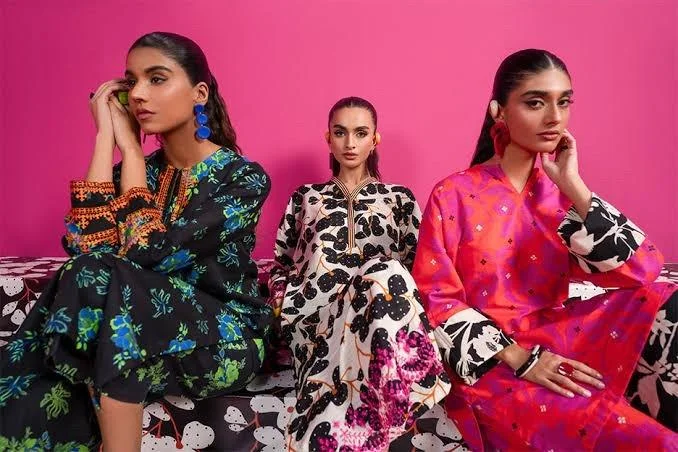
On any given day you’ll find people committed to quiet luxury, which is muted and minimal and logo-free. You’ll find gorpcore, where hiking gear becomes fashion. Dark academia gives you tweed, turtlenecks, and the energy of old libraries. Bimbocore goes the opposite direction — maximalist, unabashedly pink, deliberately unserious. And cottagecore wraps everything in linen, florals, and romanticized rural life.
These aren’t passing fads. They’re communities with their own rules, their own icons, and their own shopping habits. A Gen Z teenager with a thrift-store budget can master any one of them with more conviction than someone spending ten times as much chasing generic “trends.”
That shift matters. It means fashion authority no longer flows from the top down. It flows from the community outward.
Sustainability Has Become a Buying Filter, Not a Buzzword
A few years ago, sustainable fashion felt like a niche concern — the kind of thing mentioned at farmer’s markets or buried in brand mission statements nobody actually read.
Now it functions as a generational filter before a purchase even happens.
I spoke with a 22-year-old who runs a clothing resale page on Instagram. She told me she receives more questions about fabric composition and supply chain transparency than she does about price. Her customers — mostly Gen Z — will abandon a purchase entirely if they can’t trace where a garment was made.
This shift has pushed several things into the mainstream.
Thrifting has become Plan A, not Plan B. Apps like Depop, Vinted, and ThredUp turned second-hand shopping from something faintly embarrassing into something genuinely aspirational. In Pakistan, local Facebook groups and Instagram resellers built a thriving pre-loved market that barely existed five years ago.
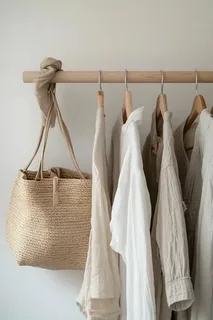
Fabric literacy is real now. People actually read labels. Linen, organic cotton, and Tencel get requested by name. Polyester has fallen under suspicion — not just for environmental reasons, but because people have figured out that natural fabrics feel better and last longer.
The “buy less, buy better” mindset is quietly overtaking the haul era. A growing number of people, particularly in their early twenties, are choosing fewer higher-quality pieces over the seasonal wardrobe overhaul. Brands that haven’t adapted are feeling it in their numbers. Brands that have — even small independent ones — are building fiercely loyal audiences.
Gender-Neutral Dressing Is Quietly Becoming the Default
When Harry Styles wore a dress on the cover of Vogue in 2020, it felt like a statement. By 2026, that statement has largely dissolved into the background, because in the circles where fashion actually lives, it has become genuinely unremarkable.

The next generation isn’t particularly interested in clothes being categorized by gender. They want clothes that are interesting, well-made, and expressive. Full stop.
This plays out in practical ways. Straight men wear fitted cardigans and wide-leg trousers without treating it as commentary. Women have claimed oversized tailoring — boxy suits cut for broader shoulders — as their own. Sizing systems are slowly shifting toward measurements rather than M/F labels. Brands like Zara and H&M have expanded gender-neutral lines not as a PR move but because that’s simply where their youngest customers are shopping.
What’s worth noting is that this isn’t really about collapsing gender distinctions for the sake of it. It’s about letting clothing just be clothing. A blazer is a blazer. If it fits and looks right, the gender label attached to it is irrelevant.
Technology Is Quietly Reshaping How We Dress
This is where things get genuinely strange, and I mean that in a good way.
AI-powered styling tools have become a real part of how people shop. Apps like Stylitics, Stitch Fix’s recommendation engine, and even Instagram’s shopping algorithm are getting good enough at learning preferences that they can surface pieces a person would actually buy. It’s not perfect yet, but it gets measurably better each season.
Virtual try-ons have moved from novelty to genuine utility. IKEA pioneered AR for furniture years ago. Now ASOS, Myntra, and even some local Pakistani brands are testing it for clothing. You hold your phone up, the app overlays a garment onto your image, and you get a real sense of fit before committing. It saves returns. It saves disappointment. It actually works.
Digital fashion sits at the stranger end of this spectrum. Buying clothes that exist only in digital space, to wear on an avatar or overlay onto a photo, sounds absurd until you remember that people spend real money on Fortnite skins. For a generation that lives a significant portion of its social life online, a digital outfit for a digital self isn’t quite so strange.
None of this replaces physical clothing. But it changes how people discover fashion, experience it, and ultimately relate to it.
Nostalgia Has Become a Design Language
Every decade gets recycled eventually. What’s happening right now, though, is more layered than straightforward nostalgia.
The nineties came back hard, then the Y2K aesthetic took over. Now the seventies and early eighties are creeping back through wide lapels, earthy tones, and flared silhouettes. And sitting alongside all of that is a genuine appreciation for what people are calling grandparent style — the comfortable, dignified, slightly formal dressing of an older generation.
This isn’t purely aesthetic. It’s a reaction.
A generation raised on fast-changing trends and disposable clothing is finding comfort in the idea of lasting style. The desire for something that felt considered. Something built to endure. Old photographs of grandparents dressed with quiet elegance have become legitimate mood boards.
Sara told me she deliberately buys from decades she didn’t live through because it feels more permanent. “Fast fashion feels like it’ll be embarrassing in two years,” she said. “Vintage already survived the embarrassment period.”
That’s not a small insight. That’s a complete philosophy shift about what clothing is for.
Streetwear Has Grown Up
Streetwear spent roughly a decade being the most exciting thing in fashion. Supreme drops caused near-riots. Nike collabs sold for ten times retail on StockX. Hoodies were treated like fine art investments.
The energy is still there, but it has matured considerably.
The logo-heavy, hype-driven version of streetwear is slowly giving way to something more considered. Cleaner lines. Higher-quality materials. Less noise. The influence of Japanese streetwear — brands like Wtaps and Neighborhood, and the broader Ura-Harajuku scene — is increasingly visible in how younger designers are approaching the aesthetic. Understated. Technical. Built to actually last.
The culture, though, hasn’t changed. Streetwear has always been about community — who you know, what you understand, how you signal belonging without needing to explain it. That DNA is still very much intact. It’s just being expressed with less fanfare.
The Personal Uniform Is Having a Moment
One of the more interesting shifts I’ve observed, particularly among people in their mid-twenties to early thirties, is a deliberate move toward what you might call a personal uniform.
This isn’t laziness dressed up as minimalism. It’s a real response to decision fatigue and a rejection of the idea that creativity has to be performed through clothing every single day.
The concept is straightforward: identify the silhouettes, colors, and pieces that genuinely suit you, then build a wardrobe almost entirely around those. It’s a capsule wardrobe, essentially, but pursued with real discipline.
Here is how it actually works in practice.
Start by auditing what you already reach for. Spend a month noticing which pieces you grab without thinking. Those are your instincts telling you something useful.
Then identify your color palette. Most people look their best within a fairly narrow range of colors. Finding yours takes some honest experimentation, but it’s worth it.
Pick two or three silhouettes that genuinely suit your body and your life. Fitted and straight? Oversized and relaxed? Tailored top with volume below? Choose something and commit to it rather than treating every morning as an open question.
Buy multiples of whatever works. If a particular brand’s plain white tee fits you perfectly, buy three of them. The same goes for the trousers, the shoes, the outerwear that feel right.
And resist trend purchases on principle. If a piece doesn’t fit your palette or your chosen silhouettes, it doesn’t come in — no matter how much you love it on someone else or how good it looks on a mannequin.
The payoff is a wardrobe where everything works together and getting dressed stops being a minor daily ordeal.
Mistakes That Keep Tripping People Up
For all the genuine style instinct in younger generations, certain patterns still catch people out.

Chasing trends without a personal filter is probably the most common one. Trends are meant to be borrowed from selectively, not adopted wholesale. Pulling one element from a trend and integrating it into your existing style usually works well. Rebuilding your entire wardrobe around a micro-trend that will peak and disappear in four months is expensive and leaves you feeling like a stranger in your own clothes.
Buying for the photo rather than for actual life is another trap. Instagram-era fashion produced an entire category of outfits that look extraordinary in a grid post and feel genuinely miserable to wear for eight hours. The best-dressed people I know have figured out how to make comfort and style work together rather than treating them as opposites.
Ignoring fit because the brand name feels like enough is a mistake that cuts across price points. A well-fitted H&M shirt will almost always look better than an ill-fitting designer piece. Fit is the single most important variable in how clothing reads on a person, and it has nothing to do with what you paid.
Assuming sustainable fashion is boring or limited stopped being accurate years ago. Thrift stores and resale platforms contain genuinely extraordinary pieces. Smaller independent brands making beautiful, carefully considered clothing are easier to discover than ever, particularly on platforms like Depop, Vestiaire Collective, and local Instagram boutiques.
Over-accessorizing when an outfit doesn’t feel right is a natural impulse but usually the wrong solution. More often than not, removing one element works better than adding another. Restraint is a learnable skill, and the current direction of fashion is actively rewarding people who have developed it.
Where This All Lands
Fashion has always reflected something true about the moment it lives in — the anxieties, the aspirations, the questions a generation is sitting with about who they are and how they want to be seen.
What the next generation seems to be saying through their clothing is something like: I want to be real, I want to last, I want to express something genuine rather than perform something expected.
That’s not a simple brief. But they’re pulling it off.
The broader shifts happening — toward sustainability, toward personal style over trend-chasing, toward clothes that transcend gender categories, toward quality that outlasts the season — genuinely make fashion more interesting and more accessible for everyone, not just for people with large wardgets or proximity to major fashion cities.
You don’t need a massive budget. You don’t need to live in London or Milan. You don’t need to follow anyone’s rules particularly closely.
Sara figured that out with a 400-rupee thrift bag and a blazer from her father’s old wardrobe. Every person in that room noticed. That really is the whole game.
Simple Lifestyle Changes That Can Improve Your Happiness
There was a period in my late twenties where everything on paper looked fine. Decent job, friends, a roof over my head, no major crisis happening. But I was waking up most mornings with this low, heavy feeling I couldn’t quite name. Not depressed, not anxious — just sort of… flat. Like the volume on life had been turned down.

I spent about six months trying to figure out what was wrong before I realized I was asking the wrong question. Nothing dramatic was wrong. What was missing were tiny, daily habits that add up to something real over time. Not therapy breakthroughs or career pivots. Small things. The kind that feel almost embarrassingly simple when you actually do them.
This article is about those things. What worked, what didn’t, what I wish I’d started sooner — and what I’ve seen make a genuine difference for people around me too.
Why Small Changes Actually Work Better Than Big Ones
Most people, when they decide they want to be happier, immediately think in terms of large life changes. Quit the job. Move to a new city. Find the relationship. Start the business.
Some of those things matter. But they’re also slow, expensive, and often out of your immediate control. And while you’re waiting for the big change to arrive, you’re still living through every ordinary Tuesday.
Small changes work differently. They’re immediate. They don’t require permission from anyone or a particular set of circumstances. You can start them today, and if you stay consistent, their effect compounds over weeks and months in ways that genuinely surprise you.
The research on this is fairly consistent — habits that support physical health, social connection, a sense of meaning, and present-moment awareness are among the strongest predictors of day-to-day wellbeing. Not wealth. Not achievement. Not status. The boring daily stuff.
Getting Outside Every Single Morning
This is the one I resisted for an embarrassingly long time. Going for a walk in the morning sounded like something people with nothing important to do enjoyed. I had emails to answer. Things to start.
Then during a particularly rough stretch, a friend basically dragged me out for a 20-minute walk at 7am three days in a row. By the third morning, I noticed something. The heaviness had lifted slightly. Not gone, but lighter. I was more patient during the day. My thinking was cleaner.
I’ve now done some version of a morning walk for over two years. Even ten minutes counts. The combination of daylight, movement, and being away from a screen in those first hours resets something in the brain that I can’t fully explain but can absolutely feel.
If you live somewhere cold or it’s genuinely difficult to get outside, even standing on a balcony in actual daylight for a few minutes makes a difference. The light exposure piece matters — it regulates your circadian rhythm and affects your mood throughout the rest of the day more than most people realize.
Fixing Your Relationship With Your Phone
This one is uncomfortable to talk about because most of us know, on some level, that our phone usage is making us less happy. And we keep doing it anyway.

I did a screen time audit about three years ago using the built-in Screen Time feature on iPhone (Android has Digital Wellbeing). What I found was mortifying. I was averaging four hours and twenty minutes of daily screen time, with a significant chunk going to mindless social media scrolling — usually within the first twenty minutes of waking up and the last thirty minutes before sleep.
The research on this is pretty clear. Passive social media consumption, the kind where you’re just scrolling and absorbing other people’s highlights, consistently correlates with lower mood and increased anxiety. Active use — posting something, having a conversation — is far less harmful. But the passive scroll? It’s doing real damage to a lot of people.
Some changes that made a practical difference for me:
Keeping the phone out of the bedroom entirely. I bought a basic alarm clock from a local shop for a few hundred rupees and plugged it in. Now my phone charges in another room. The first week was genuinely uncomfortable. After that, it felt like a relief.
Turning off all non-essential notifications. Every app defaults to maximum notification settings because that’s what serves the app, not you. Go through your settings and turn off notifications for anything that doesn’t require an actual immediate response. The silence is initially jarring, then deeply pleasant.
Setting a specific “check time” for social media rather than opening it reflexively. Even moving apps off your home screen and putting them in a folder makes you slightly less likely to open them mindlessly, because the friction of finding them is just enough to interrupt the autopilot.
You don’t need to delete everything. You just need to be the one deciding when you engage with it rather than the other way around.
Doing One Thing a Day That Has Nothing to Do With Productivity
This one took me a long time to fully accept because I had internalized the idea that enjoyment needed to be earned through output. Relax after you’ve finished everything. Read after work is done. Rest when you deserve it.
The problem is that “everything” never finishes. Work expands. The list regenerates. If rest is always the reward at the end, it never actually arrives.
What changed things for me was deliberately scheduling something enjoyable in the middle of the ordinary day — not at the end of it — and treating it as non-negotiable. A cup of tea outside. Thirty minutes of reading fiction. Cooking something properly instead of throwing together whatever was fastest.
Not as a reward. Just because it’s part of a good day.
This sounds almost too simple to matter. But the psychological effect of doing something purely for enjoyment, with no productivity attached, trains your brain to associate daily life with pleasure rather than just obligation. Over time, that changes the baseline texture of a day considerably.
Building Something Small That’s Just Yours
One of the quieter contributors to unhappiness in modern life is the feeling that everything you do is for someone else. Work for the employer. Availability for friends. Presence for family. The self disappears into the roles.

Having one small creative or personal project that belongs only to you — not for an audience, not for money, not to become anything — does something important for your sense of identity and agency.
For me it was a cooking journal. Nothing publishable. Just a notebook where I wrote down what I cooked, what worked, what didn’t, variations I wanted to try. Nobody read it. That was entirely the point. It was mine.
For other people I know it’s been growing plants on a windowsill, sketching buildings they pass on their commute, learning to play a song on an instrument they’ve owned for years and never properly used, or keeping a running list of books they’ve read with one or two sentences about each.
The project itself almost doesn’t matter. What matters is having something that exists outside of performance, outside of obligation, where you’re doing it purely because it means something to you.
Actually Sleeping Enough
This one is not glamorous but it’s probably the highest-leverage thing on this list, and it’s the one most people are still negotiating with themselves about.
Sleeping six hours and treating it as sufficient is not a sustainable lifestyle — it’s a chronic sleep deficit that accumulates and affects mood, patience, decision-making, and emotional resilience in ways that are well documented and genuinely significant.
Most adults need somewhere between seven and nine hours. Not because that’s an arbitrary recommendation but because that’s what the research consistently shows supports healthy cognitive and emotional function.
What helped me get serious about this was tracking it. The Sleep Cycle app (available on both iOS and Android) gives you data on sleep quality and duration over time. Seeing the pattern visually was more motivating than any article telling me to sleep more. I could see the direct correlation between nights under seven hours and the quality of the following day.
Practical things that moved the needle: keeping a consistent wake time even on weekends, not eating a full meal within two hours of sleep, and — back to the phone point — not having a screen in the bedroom.
The transformation in mood, patience, and general optimism from consistently sleeping enough is not subtle. It’s one of those changes where after a few weeks you genuinely wonder how you were functioning before.
Spending Time With People You Actually Like
This sounds so obvious it almost doesn’t need saying. And yet a lot of people’s social calendars are filled primarily with obligations — colleagues they didn’t choose, social situations they feel required to attend, family events that drain rather than replenish.
The quality of social connection matters more than quantity. An hour with someone who genuinely makes you feel seen and energized does more for your wellbeing than three hours at an obligatory gathering where you’re performing a version of yourself.
Start noticing how you feel after spending time with different people. Some interactions leave you feeling lighter. Others leave you feeling subtly depleted. That information is useful. Not to ruthlessly eliminate people from your life, but to make conscious choices about where you invest your social energy.
And if you’ve lost touch with people who genuinely matter to you, reach out. The barrier is almost always smaller in reality than it feels in your head. A simple voice note or message saying “I’ve been thinking about you, let’s catch up” is all it usually takes. Most people are waiting for someone else to make the first move.
Learning to Notice What’s Already Good
I’m not going to call this gratitude journaling because that phrase has been repeated so many times it’s lost all texture. But the underlying practice — deliberately noticing specific things in your actual life that are good, rather than abstract blessings — does work.
The mistake most people make with gratitude practices is being too vague. “I’m grateful for my health and my family” written on day one and day forty is just words. The version that actually shifts mood is specific and rooted in today.
What was good about today specifically? Not generally. Not theoretically. Today.
The meal that came out better than expected. The conversation that made you laugh at something you hadn’t thought about in years. The ten minutes when the light came through the window at a particular angle and it just looked beautiful. The fact that the commute was unusually smooth. Small, particular, real things.
Writing three of those down at the end of the day — even in the Notes app on your phone, even in one sentence each — gradually trains your attention toward noticing the good that’s already present rather than cataloguing what’s missing. It sounds like a small thing. It has a surprisingly large effect over time.
Moving Your Body in a Way That Doesn’t Feel Like Punishment
Exercise as a happiness strategy is not new information. But the way most people approach it — as something they’re supposed to do rather than something they want to do — makes it unsustainable.
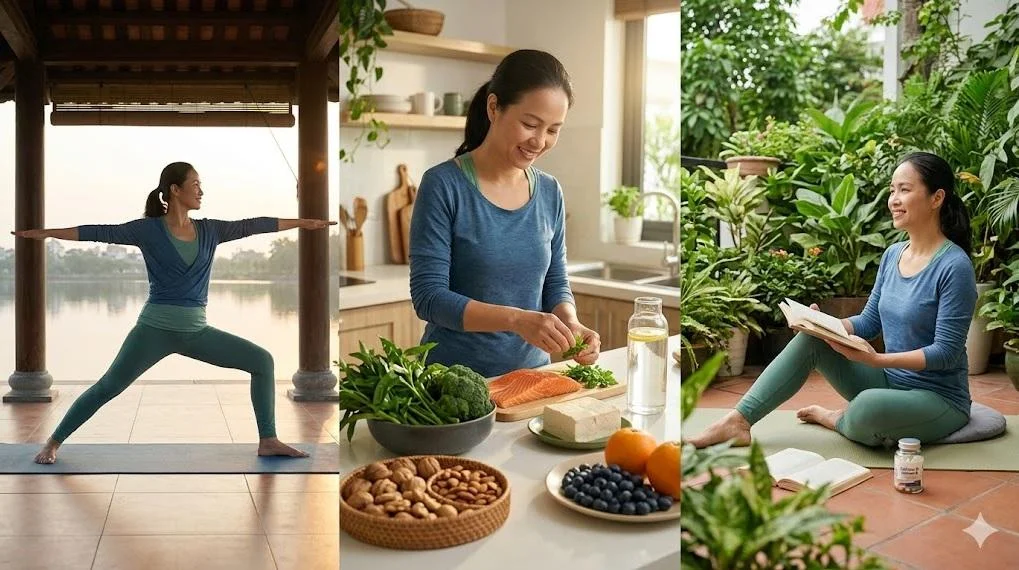
The key is finding movement you actually enjoy enough to repeat without forcing yourself. For some people that’s the gym. For a lot of people it isn’t. Swimming, cycling, dancing in the kitchen, a long walk with a podcast or music, a sport played badly with friends — all of these count. All of these produce the mood and energy benefits associated with physical activity.
Start smaller than feels significant. Ten minutes of walking every day is more valuable than an hour at the gym twice a month. Consistency beats intensity by a significant margin, especially at the beginning.
Apps like Nike Training Club, Freeletics, or even YouTube channels like Yoga with Adriene offer free guided sessions that require no equipment and minimal space. The barrier to starting is genuinely very low if you’re willing to let go of the idea that exercise has to be a production.
The Mistake Most People Make With All of This
The common error is trying to implement everything at once. Reading an article like this, feeling motivated, deciding tomorrow everything changes — sleep schedule, phone habits, morning walk, journaling, exercise, social life, personal project — and then feeling overwhelmed by day three and abandoning all of it.
Pick one thing. Just one. The one that resonated most as you read, or the one that feels most manageable to start. Do it for two weeks before adding anything else. Let it become unremarkable before you reach for the next change.
Progress that actually sticks looks slower than the motivation burst at the beginning makes you want. That’s not a problem. That’s how it works.
The people I know who have made genuine lasting changes to their happiness didn’t overhaul their lives in a week. They made one change, let it settle, made another, and looked up a year later to find things feeling noticeably different from how they used to.
That’s the version worth building toward. Not a transformation. Just a slightly better ordinary Tuesday, repeated consistently enough that it adds up to something real.